My Cart

 All Category

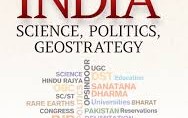
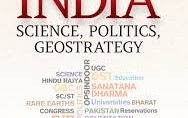
I am a scientist specialising in a new and important field of crystal engineering, which focuses on understanding how to construct and manipulate crystalline structures at the molecular level. Many people have expressed curiosity about how someone like me, immersed in the intricacies of chemistry, has ventured into writing about the re-imagination of Bhārat as a civilizational state. In my latest work, “India: Science, Politics, and Geostrategy – A 30-Year Thought Journey,” I aim to explore this intersection and provide readers with a deeper understanding of how the principles of scientific inquiry can inform and enrich our perspective on Bhārat.
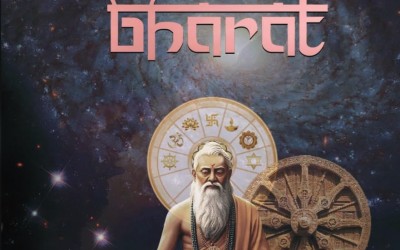
The journey from Vedas to Advait Vedānta is a journey of evolved human consciousness. This highest state of consciousness in a man is Shivattva (What is Shivattva is Ramattva, and what is Ramattva is Krishnattva). As a piece of life, as a body, it is a certain amount of earth, water, air, fire, and ether or ākāśa. And there is a fundamental intelligence that puts all these things together in a particular way to make life out of it. There is a profound and unimaginable level of intelligence that can make simple things like air into life. This intelligence that makes life happen is “consciousness.” What is Not consciousness is Wakefulness, Self-consciousness, and Alertness. Consciousness is the very basis of creation. It is boundless in its nature (body, psychological space, emotional space and energy space all have limited boundaries).
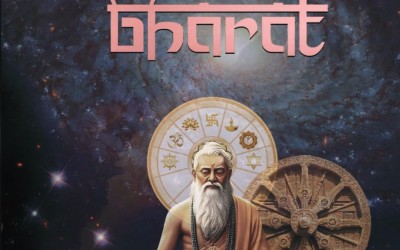
The realization of the Ātman, or Atmajñāna, is Sanātana Dharma’s highest possible Ādhyātmika attainment – with Atmajñāna comes the decisive Vedāntic realization that Ātman and Brahman is one single consciousness. The true Ādhyātmika life of Sanātana Dharma is integral and practical, not idealistic or escapist. Sanātana Dharma, as a darśhana, has always been dynamic and evolutionary; there are no regulating body for the Dharma deciding on the heresies, and blasphemies etc. (These words / practices don’t find any mention in any of the dharmic texts) Being Ādhyātmika, a practicing Sanātani must also be a practicing yogi, one whose life is an unbroken pursuit of the one Self in all. Wherever and whenever the Yogi has been eclipsed by the priest or the scholar, Sanātana Dharma has degenerated into ritual and dogma.
This nation-state framework introduces democratic and governance issues, including the unequal value of votes across states. For instance, a vote in Kerala may carry 1.8 times the weight of a vote in Rajasthan, contradicting the principle of equal vote value. This discrepancy enhances the influence of larger states over smaller ones, creating a democratic imbalance.
History is not just about the past—it is also a mirror for the present. Agnitandav of 1948 recounts a chapter of India’s history that many would prefer to forget: the wave of violence that engulfed Brahmin families in Maharashtra following Mahatma Gandhi’s assassination. The events may be over seven decades old, but their lessons remain deeply relevant in today’s India, where caste tensions, political manipulation, and social divides still simmer. Remembering 1948 is not about reopening wounds—it is about ensuring that such wounds are never inflicted again.
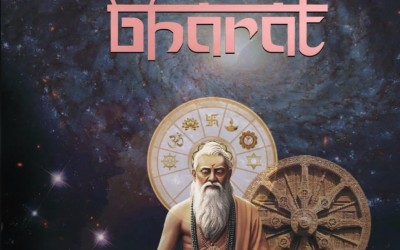
The Vedas, created thousands of years ago, do not owe their authority to anybody, they are themselves the authority, being eternal. They were never written, never created, they have existed throughout time; just as creation is infinite and eternal, without beginning and without end. And this knowledge is what is meant by the Vedas. ‘Śruti’ and ‘Smṛti’ in ancient laws are the source of guidance. ‘Śruti’ is apauruṣeyā, "not made of a man" but revealed to the Rishis, and regarded as having the highest authority; while the ‘Smṛti’ are manmade and have secondary authority. ‘Smṛti’, "that which is remembered", are a body of Bhartiya texts attributed to an author, traditionally written down, in contrast to ‘Śruti’ (the Vedic literature) considered authorless, that were transmitted verbally across the generations and fixed.
The partition of British India ranks among the most cynical and coldly calculated acts inflicted by a European colonial power as it surrendered the jewel in its imperial crown in 1947. The British have been known to draw lines on the world map to suit their economic, military and geostrategic interests, and call the divided bits countries. In most cases, these lines were drawn with diabolical foresight to keep the resulting countries prone to internal and external infighting.
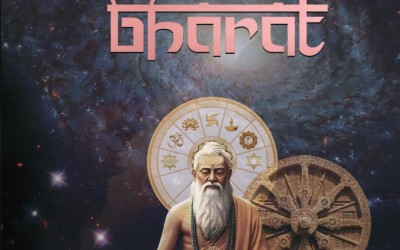
Religion has never been Bharat’s idea or legacy. Its ‘Sanātana dharma’ consists of eternal laws and principles embedded in the science of nature that governs life. ‘Dharma’ represents the deepest metaphysical essence of a worldview that is universally applied and culturally all-encompassing. It stresses an enlightened pluralism that allows the existence of many paths with a divine self within. It refers to Ātman or spirit that does not vary from person to person; its inclusion, existentialism, and equality for all have been for real. Its unity of truth and existence via pluralism and multiculturalism requires stirring up consciousness without moralizing. ‘Dharma’ is both an individual conduct as well as the entire process of governance.
Sanātana Dharma is not a religion; It has never had an established clergy or a central authority, and there has never been any final arbiter in the interpretation or application of dharma, no single text or theology, no prescribed rites or rituals, and whatever rituals that they do exist in the day-to-day living of the dharma are symbolic in nature. Sanātana Dharma has never been about mandatory or prescribed rules for ethical behavior; it does not posit absolute rights or wrongs and holds that everything is relative and contextual and the sense of right and wrong must arise only from one’s inner understanding, guided by the Buddhi or Ātman. The most important practice, therefore, is to awaken and cultivate the Ātman and the Buddhi of which spiritual discrimination – Viveka – is an essential part. Sanātana Dharma is not a set of dos and don’ts; the only thing of spiritual, social, and moral significance is the consciousness, which is incomparably more significant than a set of moral and social rules and laws.
“Unravelling Sanātana Bharat” – Bharat’s samskriti, and Sanskrit
Sanskrit language has been the unifying substrate of our dharmic samskriti and has profoundly shaped it. Dharma and Sanskrit are deeply intertwined. Without doubt, it is an understanding of Sanskrit, its inherent harmony and generative powers that enables dharma to flower.
The non-translatable nature of Sanskrit and its deep meanings are compromised by the cultural digestion of dharma into the West through the inadequate translation of vocabulary. In the course of this digestion, crucial distinctions and understandings are lost, important direct experiences of the Rishis sidelined, and the most fertile, productive and visionary dimension of dharma eradicated and relegated to antiquity. Here are few examples demonstrating the non-translatability of the Sanskrit expressions, their commonly used English equivalents that are compared, and their limitations exposed:
Ātman is not soul
CONSTITUTION OF INDIA – PERSPECTIVES IN 2025
A constitution of a country is a document that incorporates the thoughts, feelings and aspirations of its people and is laid out as a formal document which assimilates these ideas into a standard operating procedure (SOP) for day-to-day governance of the country. All countries, barring a few (Israel, U.K., New Zealand, Saudi Arabia) have a constitution. Generally, a constitution is written when a country goes through a complete and drastic change in its form of government (India 1950, Australia 1901, Canada 1867), overthrow of a monarchy and adoption of democracy (France in 1791, Germany in 1919) or takeover by an autocratic regime (USSR 1924) and also its overthrow (Poland 1992). Stable democracies also periodically overhaul their constitutions, both to reflect better the changing aspirations of their people, and also the changes in their SOP for governance modalities (France, 1958; Nigeria 1999, Ghana 1992). The topic of this blog deals with this last point. Has India with its stable democracy reached a stage where its constitution needs a complete overhaul and makeover to better reflect its present condition than does the 1950 document with all its 105 amendments that have been included over the years?
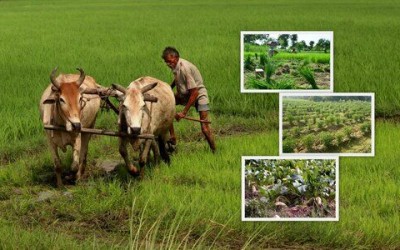
आज की ज़िन्दगी में जहाँ टेक्नोलॉजी और शहरीकरण ने हमारी सुविधाएँ बढ़ा दी हैं, वहीं हमने वह सादगी, स्वच्छता और संतुलन खो दिया है, जो हमारे पूर्वजों की जीवनशैली का मूलाधार था। तेज़ रफ्तार जिंदगी ने हमें प्लास्टिक के बर्तन, तैलीय और प्रोसेस्ड भोजन, रासायनिक उत्पाद और अपारगर प्राकृतिक संसाधनों का अंधाधुंध उपयोग अपनाने पर मजबूर कर दिया है।
लेकिन क्या हम जानते हैं – इन आधुनिक उत्पादों का हमारे स्वास्थ्य और पर्यावरण पर क्या प्रभाव पड़ता है?
वास्तव में, आज के समय में बीमारियाँ तेजी से बढ़ रही हैं – पाचन से जुड़ी समस्याएँ, त्वचा संबंधी विकार, मानसिक तनाव, मोटापा, डायबिटीज और कैंसर जैसी गंभीर बीमारियाँ। इन समस्याओं का एक बड़ा कारण है – रासायनिक और अस्वस्थ जीवनशैली।

आज के दौर में हम हर दिन ऐसे उत्पादों का उपयोग करते हैं जो हमारे जीवन को आसान बनाते हैं। लेकिन क्या आपने कभी सोचा है कि हम जिन उत्पादों का उपयोग कर रहे हैं, उनमें कितने रासायनिक पदार्थ (Chemicals) होते हैं जो हमारे स्वास्थ्य और पर्यावरण को नुकसान पहुँचा सकते हैं? बहुत से विदेशी (Imported) उत्पाद रासायनिक पदार्थों से भरे होते हैं, जिनका दीर्घकालिक उपयोग हमारे स्वास्थ्य के लिए खतरनाक साबित हो सकता है।
? Garuda Marketplace पर आपका स्वागत है, जहाँ हम आपको प्राकृतिक, सुरक्षित और भारत में निर्मित पारिस्थितिकीय उत्पाद उपलब्ध करवाते हैं।