


My Cart

 All Category

CONSTITUTION OF INDIA – PERSPECTIVES IN 2025
A constitution of a country is a document that incorporates the thoughts, feelings and aspirations of its people and is laid out as a formal document which assimilates these ideas into a standard operating procedure (SOP) for day-to-day governance of the country. All countries, barring a few (Israel, U.K., New Zealand, Saudi Arabia) have a constitution. Generally, a constitution is written when a country goes through a complete and drastic change in its form of government (India 1950, Australia 1901, Canada 1867), overthrow of a monarchy and adoption of democracy (France in 1791, Germany in 1919) or takeover by an autocratic regime (USSR 1924) and also its overthrow (Poland 1992). Stable democracies also periodically overhaul their constitutions, both to reflect better the changing aspirations of their people, and also the changes in their SOP for governance modalities (France, 1958; Nigeria 1999, Ghana 1992). The topic of this blog deals with this last point. Has India with its stable democracy reached a stage where its constitution needs a complete overhaul and makeover to better reflect its present condition than does the 1950 document with all its 105 amendments that have been included over the years?
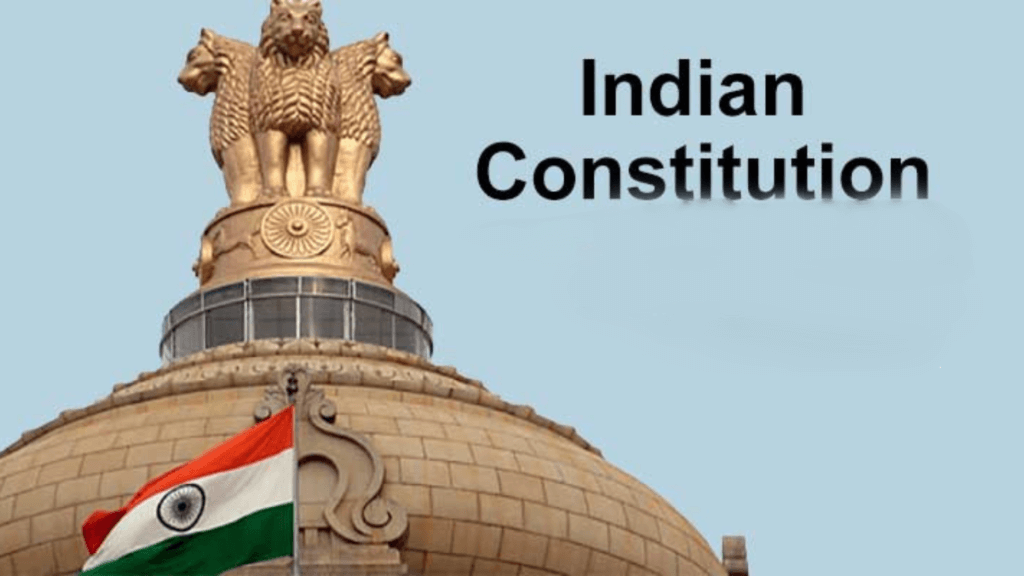
India is now Bhārat. It is not the “same” country in 2025 that it was in 1950. A new constitution would reflect its cultural and spiritual dimensions in other words more explicitly reinforce a sense of inclusivity and unity among its diverse population across religions, castes and languages
There are several issues such as the ideal number of states for effective governance, the need to examine the Seventh Schedule which deals with centre-state relations, judicial reform, the role of the all-India services, the relevance of the Rajya Sabha, and whether we need Part IV (Directive Principles of State Policy) at least in its present form. This whole issue of constitutional reform has lain in the back burner, mostly for political reasons pertaining to caste and caste-based reservations. The crux of the argument for a new constitution is that the present one closely parallels the Government of India Act 1935. Nearly 250 of the present 395 Articles in our 1950 Constitution have nearly exact equivalents in the 1935 Act, which was drawn up, in the end, by a colonial power and not by an independent sovereign country. It is not appreciated that the bulk of the present document was drafted not by B. R. Ambedkar but by B. N. Rau an ICS bureaucrat, who had drafted similar documents for the British in 1946. Ambedkar was, to be frank, just the chairman of the Drafting Committee, which contained many heavyweight legal luminaries. He was just the first among equals. So, all this talk about Babasaheb ka samvidhan, and how it is the only document that protects people in certain caste categories is just that — empty talk.
It was nearly inevitable that the common features in all these prior documents literally defaulted India into its present mode of governance with its federal structure, distribution of powers between the Union and the States, a bicameral legislature (Lok Sabha and Rajya Sabha), three wings of government (executive, judiciary, legislature), the separation of powers between them, the roles of the President and the state Governors, emergency provisions, setting up of an Election Commission, the Union, State and Concurrent Lists, and above all, the parliamentary form of government with a first-past-the-post system of elections. But today, I ask the question, do we need this kind of evolutionary constitutional development? India to Bhārat is not an evolutionary change. It is a fundamental tectonic movement. We are not the Indians of 1950 but the Bhāratiyas of 2025. Does the 1950 Constitution do full justice to us today? I think not. The current constitution does not reflect the rich cultural, spiritual, and dharmic heritage of India.
India is a very diverse country. Diversity is our strength. This diversity of Indian society and its deep-rooted spiritual traditions are not captured in a constitution that was so strongly influenced by colonial legal frameworks. Retaining the present Constitution, by invoking a blind worship of the past, overlooks the opportunity to enshrine the unique spiritual and cultural essence of India in our constitution. A constitution that reflects our civilisational values would certainly reinforce a stronger sense of national identity. This is especially true today when the whole world is recognising that we are a civilisational state and not a nation state. Proponents of retaining the present constitution might argue that its foundations have allowed for India’s democratic and secular evolution over the years. They might believe that rather than replacing the entire constitution, it might be more practical to amend it strategically to better reflect India’s cultural and spiritual dimensions. I refute such arguments. The word ‘secular’ itself has been fully discredited in India today, and by ‘democracy’ we should be enshrining our Bhāratiya version of it rather than the Western liberal model, which we have been saddled with since 1950.
Other questions remain. Is a parliamentary democracy the best form of governance for us? Is first-past-the-post better than proportional representation? Should there be a complete separation of legislative and executive wings in other words, the American system? Would 75 small states work well in the latter situation? Can the Rajya Sabha be scrapped? Constitutionally, we are at an inflection point today.
Drafting a new Constitution will be a new exercise for us. It can be initiated only by the three wings of government, but having done so, they would then need to surrender a major part of their sovereignty to a Constituent Assembly that would need to be formed with care and concern. The 1946 Assembly was remarkably free of partisan rancour, possibly because at least 30 per cent of its membership consisted of apolitical figures drawn from various segments of public life. A Constituent Assembly is a sovereign body that stands apart and higher than Parliament, as Parliament cannot influence the drafting of a new Constitution. The judiciary cannot, by definition, have any role in reviewing the merits or otherwise of a new Constitution. But above all, and this would be paramount, the Executive wing should play no role at all in the drafting. Constitutions are written to stay around for some time. They should not reflect the immediate electoral priorities of political parties. The problems with our 1950 Constitution mostly arose because a generally reasonable document became distorted with the amendments during 1950-1980. These amendments were such that they suited the political preferences of the Congress Party, particularly Jawaharlal Nehru and Indira Gandhi.
A new constitution for Bhārat is an idea whose time has come.
The very idea of revisiting history provokes discomfort. In some quarters, it borders on sacrilege-as if historical writing carries the sanctity of revealed truth. Any attempt to revise it is treated the way one treats a challenge to gospel: with outrage, not inquiry.
And yet, even religious studies have a shelf life.
History, by contrast, is often treated as timeless.

Revisiting the Arthashastra is not an exercise in nostalgia.
It is a reminder that India once operationalised the very systems that we now treat as paperwork - daily, tightly, and with clear lines of responsibility.
For more than two millennia, India ran markets, long-distance trade, and detailed accounting regimes that were exacting, verified, and enforceable.
They were not perfect. But disciplined enough to keep a large economy functioning across shocks and dynasties.
Long before modern textbooks tried to explain these same ideas with different terminology.
I am a scientist specialising in a new and important field of crystal engineering, which focuses on understanding how to construct and manipulate crystalline structures at the molecular level. Many people have expressed curiosity about how someone like me, immersed in the intricacies of chemistry, has ventured into writing about the re-imagination of Bhārat as a civilizational state. In my latest work, “India: Science, Politics, and Geostrategy – A 30-Year Thought Journey,” I aim to explore this intersection and provide readers with a deeper understanding of how the principles of scientific inquiry can inform and enrich our perspective on Bhārat.
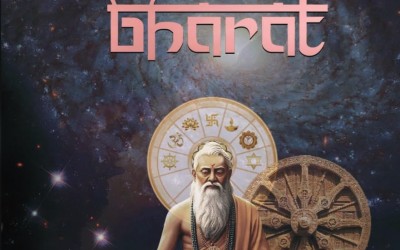
The journey from Vedas to Advait Vedānta is a journey of evolved human consciousness. This highest state of consciousness in a man is Shivattva (What is Shivattva is Ramattva, and what is Ramattva is Krishnattva). As a piece of life, as a body, it is a certain amount of earth, water, air, fire, and ether or ākāśa. And there is a fundamental intelligence that puts all these things together in a particular way to make life out of it. There is a profound and unimaginable level of intelligence that can make simple things like air into life. This intelligence that makes life happen is “consciousness.” What is Not consciousness is Wakefulness, Self-consciousness, and Alertness. Consciousness is the very basis of creation. It is boundless in its nature (body, psychological space, emotional space and energy space all have limited boundaries).








Comments (0)