My Cart

 All Category

The realization of the Ātman, or Atmajñāna, is Sanātana Dharma’s highest possible Ādhyātmika attainment – with Atmajñāna comes the decisive Vedāntic realization that Ātman and Brahman is one single consciousness. The true Ādhyātmika life of Sanātana Dharma is integral and practical, not idealistic or escapist. Sanātana Dharma, as a darśhana, has always been dynamic and evolutionary; there are no regulating body for the Dharma deciding on the heresies, and blasphemies etc. (These words / practices don’t find any mention in any of the dharmic texts) Being Ādhyātmika, a practicing Sanātani must also be a practicing yogi, one whose life is an unbroken pursuit of the one Self in all. Wherever and whenever the Yogi has been eclipsed by the priest or the scholar, Sanātana Dharma has degenerated into ritual and dogma.
The Vedas, created thousands of years ago, do not owe their authority to anybody, they are themselves the authority, being eternal. They were never written, never created, they have existed throughout time; just as creation is infinite and eternal, without beginning and without end. And this knowledge is what is meant by the Vedas. ‘Śruti’ and ‘Smṛti’ in ancient laws are the source of guidance. ‘Śruti’ is apauruṣeyā, "not made of a man" but revealed to the Rishis, and regarded as having the highest authority; while the ‘Smṛti’ are manmade and have secondary authority. ‘Smṛti’, "that which is remembered", are a body of Bhartiya texts attributed to an author, traditionally written down, in contrast to ‘Śruti’ (the Vedic literature) considered authorless, that were transmitted verbally across the generations and fixed.
Religion has never been Bharat’s idea or legacy. Its ‘Sanātana dharma’ consists of eternal laws and principles embedded in the science of nature that governs life. ‘Dharma’ represents the deepest metaphysical essence of a worldview that is universally applied and culturally all-encompassing. It stresses an enlightened pluralism that allows the existence of many paths with a divine self within. It refers to Ātman or spirit that does not vary from person to person; its inclusion, existentialism, and equality for all have been for real. Its unity of truth and existence via pluralism and multiculturalism requires stirring up consciousness without moralizing. ‘Dharma’ is both an individual conduct as well as the entire process of governance.
Sanātana Dharma is not a religion; It has never had an established clergy or a central authority, and there has never been any final arbiter in the interpretation or application of dharma, no single text or theology, no prescribed rites or rituals, and whatever rituals that they do exist in the day-to-day living of the dharma are symbolic in nature. Sanātana Dharma has never been about mandatory or prescribed rules for ethical behavior; it does not posit absolute rights or wrongs and holds that everything is relative and contextual and the sense of right and wrong must arise only from one’s inner understanding, guided by the Buddhi or Ātman. The most important practice, therefore, is to awaken and cultivate the Ātman and the Buddhi of which spiritual discrimination – Viveka – is an essential part. Sanātana Dharma is not a set of dos and don’ts; the only thing of spiritual, social, and moral significance is the consciousness, which is incomparably more significant than a set of moral and social rules and laws.
“Unravelling Sanātana Bharat” – Bharat’s samskriti, and Sanskrit
Sanskrit language has been the unifying substrate of our dharmic samskriti and has profoundly shaped it. Dharma and Sanskrit are deeply intertwined. Without doubt, it is an understanding of Sanskrit, its inherent harmony and generative powers that enables dharma to flower.
The non-translatable nature of Sanskrit and its deep meanings are compromised by the cultural digestion of dharma into the West through the inadequate translation of vocabulary. In the course of this digestion, crucial distinctions and understandings are lost, important direct experiences of the Rishis sidelined, and the most fertile, productive and visionary dimension of dharma eradicated and relegated to antiquity. Here are few examples demonstrating the non-translatability of the Sanskrit expressions, their commonly used English equivalents that are compared, and their limitations exposed:
Ātman is not soul
“Unravelling Sanātana Bharat” – The lifeline of samskritic Bharat
The book, “Unravelling Sanātana Bharat” by Arun Ganesh and Dr. Ankit Shah acknowledges the urge to transform Bharat in the next 25-year timeframe, fulcrumed on almost 25,000 years of its samskriti, underpinned by dharmic principles, which are sanātana (eternal, and not static, for their ability to renew themselves). This is the reason, according to Sri Aurobindo, “Sanātana Dharma is life itself; it is thing that has not so much to be believed as lived”.
Samskriti means to live life in an equanimous way - to move with equanimity, ease and exuberance, allowing the human system to attain its peak and let human beings reach their fullest capabilities, with an ability to see things as they are. ‘Samskriti’ represents an essence whose antiquity is older than the legend. The aim of this essence is to allow human mechanism to grow to its fullest potential. Samskriti is not just confined to the material world and includes the pursuit of a higher purpose. Sanātana Dharma samskriti is an inseparable part of the integrally unified Dharma. Aesthetic and sensual pursuits in samskriti are thus under this framework, differing from ‘culture’, which is ill-defined in comparison, devoid of any unified or singular metaphysical foundation.
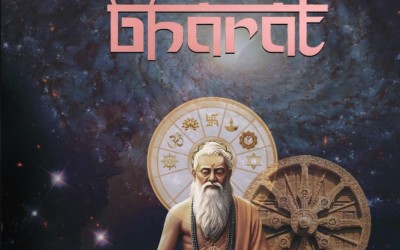
“Unravelling Sanātana Bharat” – The Rishis, Darśhana, and Dharma
The book, “Unravelling Sanātana Bharat” by Arun Ganesh and Dr. Ankit Shah acknowledges the profound contributions of our Rishis who laid the foundation of ‘Bharat Varsha’ and its Sanātana Dharma. The Rishis were amongst the first to delve into the profound mystical depths of human experience, and to them, we owe this body of Samskriti, that has come to be known as Sanātana Dharma. The ancient Vedic Rishis (seers) and Rishikās , who laid the foundations for ‘Bharat Varsha’, were the earliest humans on earth to discover the unifying and the harmonizing principle behind the cosmos and the cosmic experiences.

At times, history hides its darkest chapters under layers of silence and forgetfulness. Yet, some stories demand to be told—not out of resentment, but as a solemn reminder of the consequences when hatred is weaponized for political gain.
One such deeply moving account is captured in the remarkable book “The Agnitandav of 1948” by Ranga Date, now available at Garuda Marketplace. This powerful work sheds light on the painful experiences of the Brahmin community during one of India’s most tragic and overlooked episodes, following Mahatma Gandhi’s assassination in 1948.
-(1).jpeg)
भारत भूमि पर यदि किसी एक प्रतीक को सनातन धर्म की धरोहर कहा जाए, तो निस्संदेह वह गौ माता हैं। गाय केवल एक जीव नहीं, बल्कि हमारी संस्कृति, हमारी परंपरा और हमारी आत्मा का जीवंत रूप है। भगवान श्रीराम हों या भगवान श्रीकृष्ण—दोनों ही अवतारों का जीवन गौ माता से गहराई से जुड़ा हुआ है।
आज जब पूरी दुनिया "सस्टेनेबिलिटी" और "इको-फ्रेंडली प्रोडक्ट्स" की बात कर रही है, तब हमारे ऋषि-मुनियों ने हजारों वर्ष पूर्व ही गौ आधारित जीवनशैली को अपनाकर यह दिखा दिया था कि समृद्धि और सात्विकता का आधार केवल और केवल गोवंश ही है।
इसी सनातन सत्य को सामने लाने और गौ माता पर मंडरा रहे संकट को समझाने के लिए यह पुस्तक प्रस्तुत की गई है।
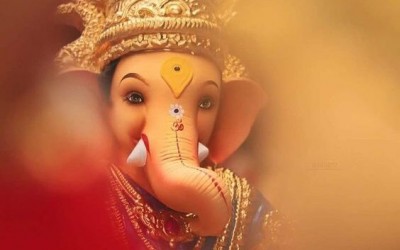
भारत में हर त्योहार सिर्फ उत्सव नहीं होता, बल्कि वह हमारी संस्कृति, परंपरा और जीवनशैली का प्रतीक भी होता है। इन्हीं पावन त्योहारों में से एक है गणेश चतुर्थी, जब विघ्नहर्ता गणपति बप्पा का स्वागत श्रद्धा और उल्लास के साथ किया जाता है। घर-घर में पूजा-अर्चना होती है, आरती गूँजती है और वातावरण भक्ति, शांति और आनंद से भर जाता है।
लेकिन क्या आपने कभी सोचा है कि हम इस पावन अवसर को और अधिक प्राकृतिक और स्वदेशी तरीके से कैसे मना सकते हैं? जब पूजा में प्रयुक्त हर सामग्री शुद्ध, प्राकृतिक और भारतीय हो, तभी यह पर्व अपनी वास्तविक गरिमा को प्राप्त करता है।
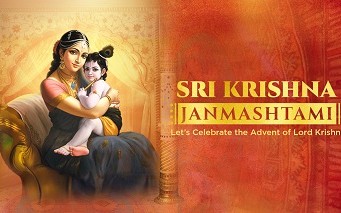
भारत के त्योहार केवल तिथियों का उत्सव नहीं होते, बल्कि वे हमारी संस्कृति, परंपराओं और भावनाओं का जीवंत प्रतीक हैं। ऐसे ही पावन त्योहारों में से एक है श्रीकृष्ण जन्माष्टमी — वह दिन जब संपूर्ण ब्रह्मांड बाल गोपाल के जन्मोत्सव में डूब जाता है।
नंद के आनंद भयो, जय कन्हैया लाल की… यह मंत्र, भजन और घंटियों की ध्वनि हमारे हृदय में भक्ति की लहर भर देती है।

Imagine looking at the detailed sculptures of the Brihadeeswarar Temple or being among the old ruins of Nalanda. You are overcome by a deep sense of wonder, a link to a legacy spanning back thousands of years. The strength of Bharat's culture lies in its rich, alive legacy that contains great knowledge, scientific insight, and creative genius. Preserving this culture is about sparking a better future, not only about respecting the past; it is about pulling power and inspiration from the wellspring of our forebears.

In the midst of noise, speed, and endless consumption, many of us feel a quiet call: a yearning to return to something real, something rooted. This inner voice is not just seeking sustainability; it is seeking spiritual connection through conscious living. This is the essence of eco-spirituality. A path that recognizes nature not as a resource to be used, but as a sacred relationship to be honored.