


My Cart

 All Category
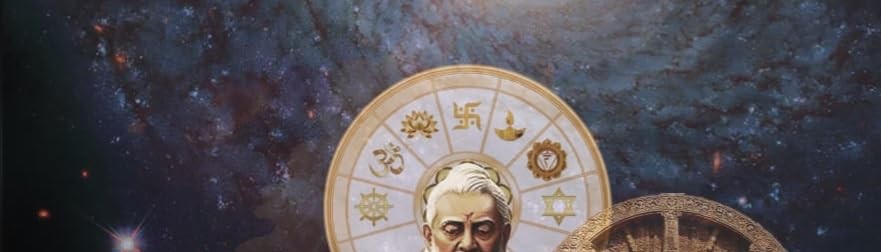
Religion has never been Bharat’s idea or legacy. Its ‘Sanātana dharma’ consists of eternal laws and principles embedded in the science of nature that governs life. ‘Dharma’ represents the deepest metaphysical essence of a worldview that is universally applied and culturally all-encompassing. It stresses an enlightened pluralism that allows the existence of many paths with a divine self within. It refers to Ātman or spirit that does not vary from person to person; its inclusion, existentialism, and equality for all have been for real. Its unity of truth and existence via pluralism and multiculturalism requires stirring up consciousness without moralizing. ‘Dharma’ is both an individual conduct as well as the entire process of governance.
Sanātana Dharma is not a religion; It has never had an established clergy or a central authority, and there has never been any final arbiter in the interpretation or application of dharma, no single text or theology, no prescribed rites or rituals, and whatever rituals that they do exist in the day-to-day living of the dharma are symbolic in nature. Sanātana Dharma has never been about mandatory or prescribed rules for ethical behavior; it does not posit absolute rights or wrongs and holds that everything is relative and contextual and the sense of right and wrong must arise only from one’s inner understanding, guided by the Buddhi or Ātman. The most important practice, therefore, is to awaken and cultivate the Ātman and the Buddhi of which spiritual discrimination – Viveka – is an essential part. Sanātana Dharma is not a set of dos and don’ts; the only thing of spiritual, social, and moral significance is the consciousness, which is incomparably more significant than a set of moral and social rules and laws.
The Sanātana system in its essence is an experiential framework that creates a knowledge / inquiry system, whereas the Abrahamic religions belong to a belief framework. Sanātana Dharma does not lend itself to the definition of religion borne out of a claim of God’s exclusivist intervention into the affairs of humankind. The Sanātana system is a description framework. Creation, Soul, and God are based on the revealed Book, not subject to verification or debate (any such act is heresy), and an irrefutable Truth on the authority of God.
Sanātana Dharma treats Time as cyclical. The Big Bang theory being ever-expanding is being doubted, and scientists are seriously considering the cyclical concept of Time. Beliefs in Creationism and Linear Time are a direct negation of gratitude towards anyone except the One Creator, the God. The Bhartiya systems have all followed a multi-valued logic, beginning with the Vedas which prescribed Chatushkoti, or the four-valued logic. The core darśhana of Sanātana Dharma like Ātman and Moksha depend upon inner seeking, and the concepts of immanence and transcendence of the Self. ‘Ekam Sad Vipra bahudha vadanti’, or many ‘paths lead to the same Truth’ is possible only with a many-valued logic.
Agnosticism and constant questioning have been fundamental to Sanātana Dharma right from the oldest text of this samskriti, the Rig Veda, which has in its hymn called the “Nāsadīyasūkta” deals with aspects of cosmology and the origin of the universe. In a series of questions over seven Ślokas, it gets to the heart of the matter and wonders if that high and mighty God indeed existed, or even if he/she did, did they indeed know the real truth! In the Bhartiya tradition, there was no blasphemy or heresy, and this foundational hymn is in itself agnostic about the existence of an all-powerful, supreme reigning God that created the universe. That one could belong to the broad Sanātana umbrella and still have varied interpretations of divinity and its relationship with the mortal, as characterized by the six theistic and three atheistic schools of darśhana, has been the strength of this samskriti. Nāstikas, those who reject the authority of the Vedas and other fundamental tenets of the Āstika darśhana, and Nirīśvaravāda, those who deny the existence of a personal creator deity (Ishvara), are all considered part of the Sanātana Dharma family.
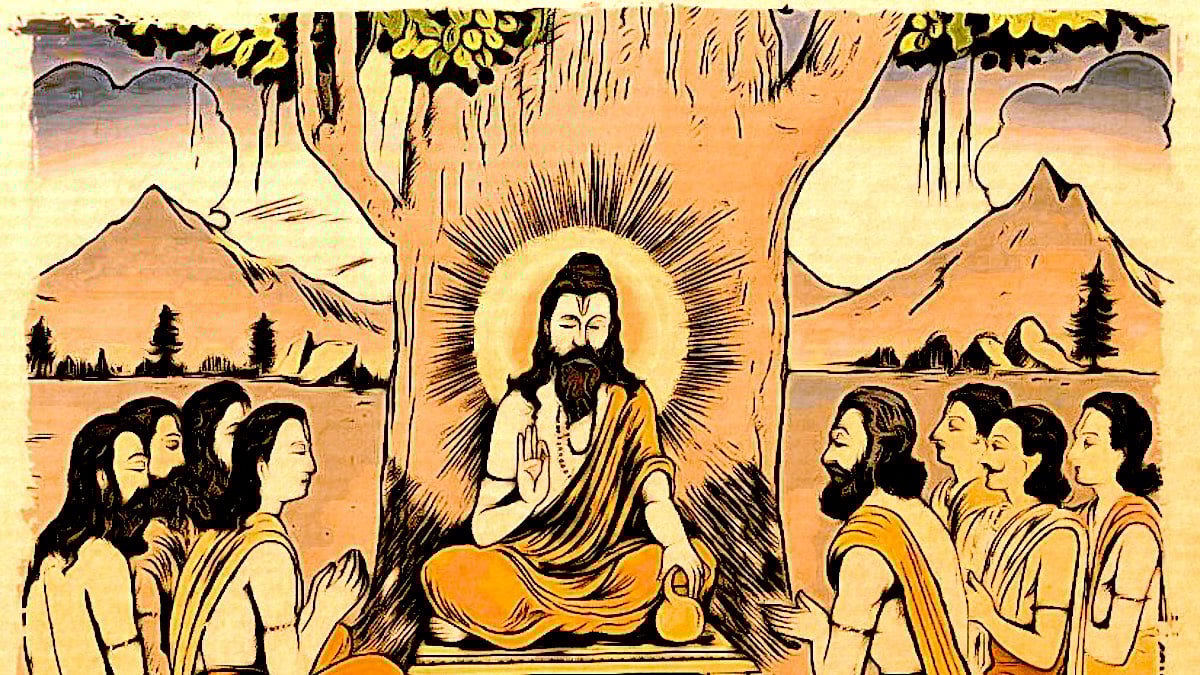
Religion is a set of tautological dogmas - very effective for cult formation, power structures. But dogma are essentially Untruths / non-truths hence at variance with Dharma / Truth. The Abrahamic world view is monotheistic which believes in transcendence - to say that God is transcendent is to say that he is exalted, above, beyond us; Whereas Bhartiya way is immanence - to say that God is immanent is to say that he is present in time and space, that he is in us.
All beliefs, with labyrinth of ego (Ahaṃkāra) at the center, are heavily challenged by Vedānta. In the Śruti Dharma (Vedānta, Upnishads, and the Bhagavad-gītā) there is no space for belief. It is all about Ātma Avlokan (introspection) leading to Ātmajñāna. Śruti says, "Bodho aham" ("I am consciousness"), a key understanding in Advaita Vedānta that emphasizes the oneness of the individual self (Ātman) with the ultimate reality (Brahman). From this Bodh (Knowledge/Wisdom), what proceeds is liberation – from bondage, ignorance, maya, and avidyā. Mukti (liberation) is nothing but cutting through this maya, which means challenging all belief systems. Once awakened, one will take care of his responsibilities, which is what dharma is. Seeking Truth can never be imposing; Whereas belief is often an imposition on others. Only a seeker can argue that if God is all too powerful, why can’t he have human form; especially, a human being who is determined to rise beyond, and become an atmajñāni - one who has become Ātman, and is liberated from all bondage, and avidyā or spiritual ignorance and suffering.
That all religions are the same was equated with Sarva Dharma Sambhava – an idea from Bharat that all dharmas, or laws of the universal life and cosmic intelligence, are one. However, no religion in the world has embraced this idea that all religions are the same, nor have any given up their particular claim to the ultimate truth.
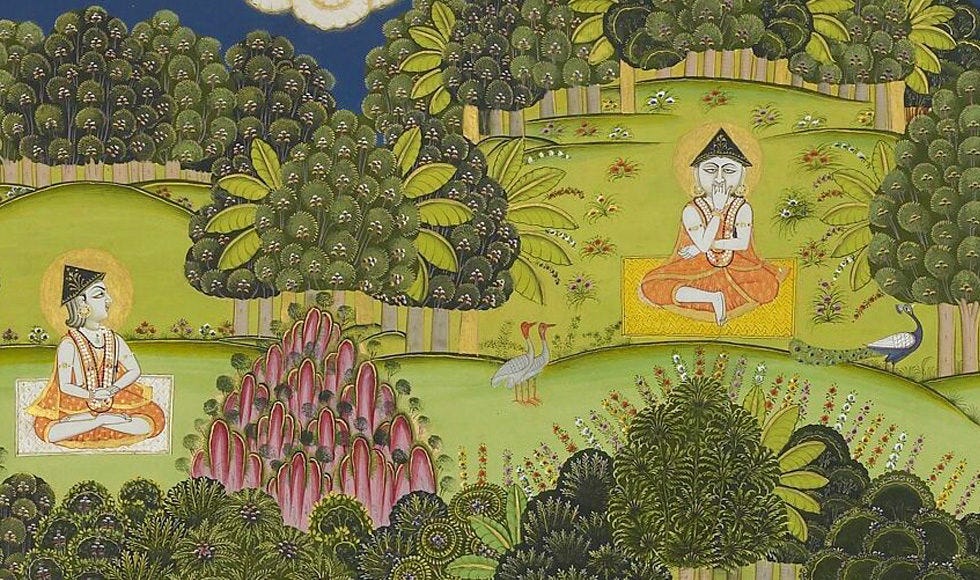
Sanātana Dharma is awakened intelligence. The mind lives in beliefs; A non-believer is the one who lives in the Ātman. For him, no ‘ism’ applies. Sanātana Dharma is also called ‘Swadharma’. That is what Shri Krishna has talked about. “When Shri Krishna says, ‘Swadharme nidhanam shreyah (स्वधर्मे निधनं श्रेयः It is preferable to die for one’s dharma!),’ he is talking about the action of intelligence. Sanātana Dharma cannot be understood in terms of faiths that have started in historical time and have a single scripture, a codified set of beliefs and practices, and an ecclesiastical body. There is no place in it for heresy or blasphemy, no tradition of crusades, no bifurcation of humanity into the faithful and the unfaithful, no clash with science or with any faith, as the truth can be expressed in a million ways. Sanātana Dharma goads one to move from untruth to Truth, from darkness to Light, and from death to Immortality. The most important sādhanā (spiritual discipline) is to live in truth. If one is peaceful, joyful, and pleasant in one’s experience, it means one is in truth. If we move the world’s population in the direction of becoming free of fear, guilt, and greed, we will see Sanātana Dharma sprout across the planet. Sanātana means eternal nature, and there is nothing to convert to – no ideology, no philosophy, no God. Being a Sanātani does not mean disregarding one’s biology or psychology. Once body and mind are made into stepping stones and we stand above them, we are a Sanātani.
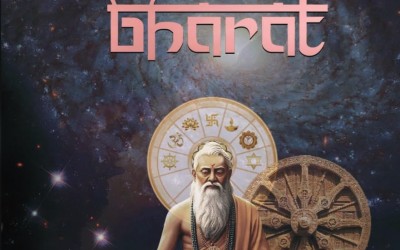
The journey from Vedas to Advait Vedānta is a journey of evolved human consciousness. This highest state of consciousness in a man is Shivattva (What is Shivattva is Ramattva, and what is Ramattva is Krishnattva). As a piece of life, as a body, it is a certain amount of earth, water, air, fire, and ether or ākāśa. And there is a fundamental intelligence that puts all these things together in a particular way to make life out of it. There is a profound and unimaginable level of intelligence that can make simple things like air into life. This intelligence that makes life happen is “consciousness.” What is Not consciousness is Wakefulness, Self-consciousness, and Alertness. Consciousness is the very basis of creation. It is boundless in its nature (body, psychological space, emotional space and energy space all have limited boundaries).

The violence of 1948 in Maharashtra is not widely remembered today. In the aftermath of Gandhi’s assassination, Brahmin families—teachers, priests, farmers, professionals—suddenly found themselves targeted in a wave of anger and organized hatred. Homes were burnt, livelihoods destroyed, and lives shattered. And yet, for all its devastation, this chapter of history was quickly buried, rarely acknowledged in official records or public discourse.
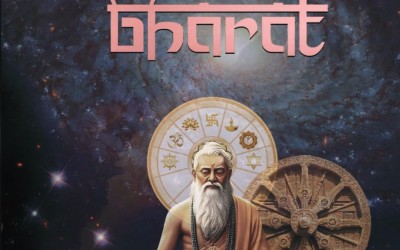
The realization of the Ātman, or Atmajñāna, is Sanātana Dharma’s highest possible Ādhyātmika attainment – with Atmajñāna comes the decisive Vedāntic realization that Ātman and Brahman is one single consciousness. The true Ādhyātmika life of Sanātana Dharma is integral and practical, not idealistic or escapist. Sanātana Dharma, as a darśhana, has always been dynamic and evolutionary; there are no regulating body for the Dharma deciding on the heresies, and blasphemies etc. (These words / practices don’t find any mention in any of the dharmic texts) Being Ādhyātmika, a practicing Sanātani must also be a practicing yogi, one whose life is an unbroken pursuit of the one Self in all. Wherever and whenever the Yogi has been eclipsed by the priest or the scholar, Sanātana Dharma has degenerated into ritual and dogma.

History is not just about the past—it is also a mirror for the present. Agnitandav of 1948 recounts a chapter of India’s history that many would prefer to forget: the wave of violence that engulfed Brahmin families in Maharashtra following Mahatma Gandhi’s assassination. The events may be over seven decades old, but their lessons remain deeply relevant in today’s India, where caste tensions, political manipulation, and social divides still simmer. Remembering 1948 is not about reopening wounds—it is about ensuring that such wounds are never inflicted again.








Comments (0)