


My Cart

 All Category

The year 1948 is etched in India’s memory for the assassination of Mahatma Gandhi and the challenges of Partition. Yet, hidden beneath these national headlines, a different fire raged — the caste riots. These were not just clashes of communities but struggles where power, politics, and prejudice collided. Agnitandav of 1948 brings these forgotten events back to life, showing how ordinary families bore the brunt of caste-driven violence while extraordinary acts of compassion flickered in the darkness.
But why do these stories matter today? Because the wounds of caste continue to shape our society — and remembering 1948 is not just about the past, but about healing for the future.
The Forgotten Context of 1948
After independence in 1947, India stood at the crossroads of hope and despair. The Partition had left millions displaced, and Gandhi’s assassination in January 1948 deepened uncertainty. Beneath this national turmoil, local tensions simmered — caste rivalries, land disputes, and political opportunism.
In regions like Western Maharashtra and Nagpur, the caste divide turned explosive. These riots did not dominate front-page news, yet they scarred thousands of lives. Agnitandav of 1948 takes us into these overlooked fires, asking: What does freedom mean if sections of society still burn in silence?

Caste tensions had long roots in questions of land ownership, temple rights, and hereditary power. With independence, these struggles collided with the shifting balance of political influence. Local elites, often aligned with broader party politics, stoked divisions to maintain control.
In Nagpur, the emerging national leadership could not always contain caste rivalries on the ground. In Kolhapur and surroundings, traditional power centres and their rivals clashed, each side claiming the mantle of justice.
Priests and temples often became symbols of identity. Sacred spaces, instead of healing divides, were dragged into political battles. Rituals that once united communities were twisted into markers of exclusion.
When faith becomes a tool of politics, it fuels division instead of offering solace — a theme that Agnitandav of 1948 illustrates vividly.
One of the haunting realities of 1948 was how ordinary families, who had little to do with politics, became its victims. Houses were looted, livelihoods destroyed, and trust broken overnight.
Agnitandav of 1948 narrates the story of a farmer’s family whose only “crime” was belonging to a particular caste. Their struggle mirrors countless others who found themselves on the wrong side of shifting power lines.
Yet, even in the fire, humanity shone through. The book tells of villagers who sheltered neighbours despite belonging to rival castes. Acts of courage — a woman carrying food to a persecuted family, a landlord hiding farmhands from rioters — remind us that compassion can defy hate.

These stories pose a question: If compassion was possible in 1948’s chaos, why not today?
When we forget episodes like the caste riots of 1948, we lose more than memory — we lose the lessons they carry. These stories remind us how fragile harmony can be, and how easily prejudice can be weaponized.
Silence allows history to repeat itself. That’s why retelling these stories matters: it keeps the warning alive.
Caste remains a fault line — dormant in places, raging in others.
Politics can inflame or cool tensions — leaders matter.
Compassion saves lives — then and now.
In an age where caste, language and identity politics still shape elections and social discourse, the lessons of 1948 remain painfully relevant.

The caste riots of 1948 may not fill our schoolbooks, but they live on in the silences of those who witnessed them. Agnitandav of 1948 brings these silences into words — not just to recount pain, but to remind us of resilience, compassion, and the urgent need to heal.
The fire of caste strife once consumed towns and villages. The question is: will we allow it to burn again, or will we choose unity as water to cool the flames?
Uncover the 1948 caste riots in Agnitandav of 1948. Forgotten fires, acts of compassion, lessons for today. Buy now on GarudaLife/Amazon
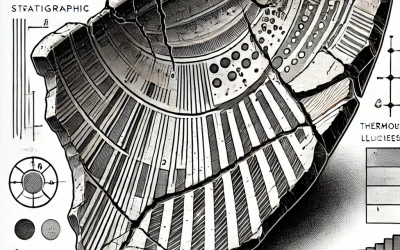
Pots, Pans, and the Architecture of an Economy
Ajay Sharma I Author, India Beyond the Blips
Archaeologists often get mocked in certain circles as the “pots-and-pans people.”
A throwaway line meant to belittle a discipline.
Ironically, those pots and pans have done more to reconstruct India’s economic history than speculative civilisational commentary.
This is not about romance.
It is about method.
And pottery - humble, fragile, abundant - is among the most powerful scientific tools we have for understanding how a civilisation actually worked.

The very idea of revisiting history provokes discomfort. In some quarters, it borders on sacrilege-as if historical writing carries the sanctity of revealed truth. Any attempt to revise it is treated the way one treats a challenge to gospel: with outrage, not inquiry.
And yet, even religious studies have a shelf life.
History, by contrast, is often treated as timeless.

Some events are remembered, taught, and commemorated. Others are quietly buried, their lessons left untold. The caste-driven violence of 1948 belongs to the second kind—an episode that scarred communities but slipped through the cracks of official memory.

Why I wrote Agnitandav
Every book begins with a question. Mine was simple but heavy: What happens when stories of pain are silenced for too long?
Growing up, I had heard fragments about the caste-driven violence of 1948. They were whispers, half-told tales, often avoided because they carried discomfort and shame. Over time, I realized that these silences weren’t just about the past — they shaped how we understood ourselves today. And that realization became the seed for Agnitandav of 1948.








Comments (0)