My Cart

 All Category

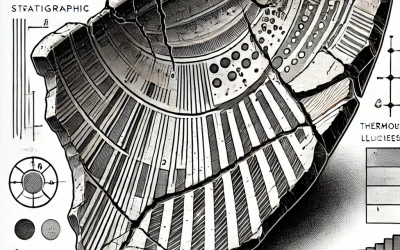
Pots, Pans, and the Architecture of an Economy
Ajay Sharma I Author, India Beyond the Blips
Archaeologists often get mocked in certain circles as the “pots-and-pans people.”
A throwaway line meant to belittle a discipline.
Ironically, those pots and pans have done more to reconstruct India’s economic history than speculative civilisational commentary.
This is not about romance.
It is about method.
And pottery - humble, fragile, abundant - is among the most powerful scientific tools we have for understanding how a civilisation actually worked.
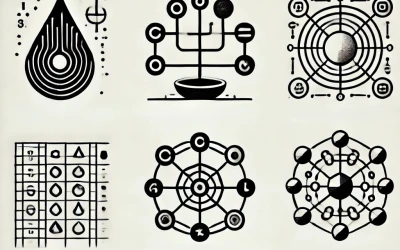
ndia’s past is often narrated through stone—temples, forts, ruins, monuments.
But India’s real civilisational footprint was never stone.
It was systems.
Systems that travelled.
Systems that scaled.
Systems that still power the global economy.

The very idea of revisiting history provokes discomfort. In some quarters, it borders on sacrilege-as if historical writing carries the sanctity of revealed truth. Any attempt to revise it is treated the way one treats a challenge to gospel: with outrage, not inquiry.
And yet, even religious studies have a shelf life.
History, by contrast, is often treated as timeless.

Revisiting the Arthashastra is not an exercise in nostalgia.
It is a reminder that India once operationalised the very systems that we now treat as paperwork - daily, tightly, and with clear lines of responsibility.
For more than two millennia, India ran markets, long-distance trade, and detailed accounting regimes that were exacting, verified, and enforceable.
They were not perfect. But disciplined enough to keep a large economy functioning across shocks and dynasties.
Long before modern textbooks tried to explain these same ideas with different terminology.
I am a scientist specialising in a new and important field of crystal engineering, which focuses on understanding how to construct and manipulate crystalline structures at the molecular level. Many people have expressed curiosity about how someone like me, immersed in the intricacies of chemistry, has ventured into writing about the re-imagination of Bhārat as a civilizational state. In my latest work, “India: Science, Politics, and Geostrategy – A 30-Year Thought Journey,” I aim to explore this intersection and provide readers with a deeper understanding of how the principles of scientific inquiry can inform and enrich our perspective on Bhārat.

The violence of 1948 in Maharashtra is not widely remembered today. In the aftermath of Gandhi’s assassination, Brahmin families—teachers, priests, farmers, professionals—suddenly found themselves targeted in a wave of anger and organized hatred. Homes were burnt, livelihoods destroyed, and lives shattered. And yet, for all its devastation, this chapter of history was quickly buried, rarely acknowledged in official records or public discourse.
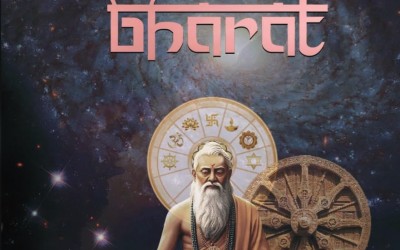
The journey from Vedas to Advait Vedānta is a journey of evolved human consciousness. This highest state of consciousness in a man is Shivattva (What is Shivattva is Ramattva, and what is Ramattva is Krishnattva). As a piece of life, as a body, it is a certain amount of earth, water, air, fire, and ether or ākāśa. And there is a fundamental intelligence that puts all these things together in a particular way to make life out of it. There is a profound and unimaginable level of intelligence that can make simple things like air into life. This intelligence that makes life happen is “consciousness.” What is Not consciousness is Wakefulness, Self-consciousness, and Alertness. Consciousness is the very basis of creation. It is boundless in its nature (body, psychological space, emotional space and energy space all have limited boundaries).

History is not just about the past—it is also a mirror for the present. Agnitandav of 1948 recounts a chapter of India’s history that many would prefer to forget: the wave of violence that engulfed Brahmin families in Maharashtra following Mahatma Gandhi’s assassination. The events may be over seven decades old, but their lessons remain deeply relevant in today’s India, where caste tensions, political manipulation, and social divides still simmer. Remembering 1948 is not about reopening wounds—it is about ensuring that such wounds are never inflicted again.
This nation-state framework introduces democratic and governance issues, including the unequal value of votes across states. For instance, a vote in Kerala may carry 1.8 times the weight of a vote in Rajasthan, contradicting the principle of equal vote value. This discrepancy enhances the influence of larger states over smaller ones, creating a democratic imbalance.
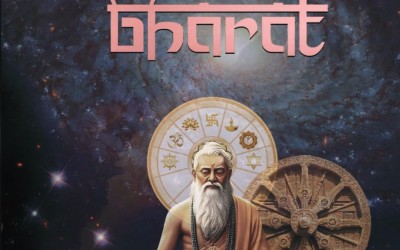
The realization of the Ātman, or Atmajñāna, is Sanātana Dharma’s highest possible Ādhyātmika attainment – with Atmajñāna comes the decisive Vedāntic realization that Ātman and Brahman is one single consciousness. The true Ādhyātmika life of Sanātana Dharma is integral and practical, not idealistic or escapist. Sanātana Dharma, as a darśhana, has always been dynamic and evolutionary; there are no regulating body for the Dharma deciding on the heresies, and blasphemies etc. (These words / practices don’t find any mention in any of the dharmic texts) Being Ādhyātmika, a practicing Sanātani must also be a practicing yogi, one whose life is an unbroken pursuit of the one Self in all. Wherever and whenever the Yogi has been eclipsed by the priest or the scholar, Sanātana Dharma has degenerated into ritual and dogma.

ndia’s democratic journey is often celebrated for its diversity, vibrancy, and resilience. Yet beneath the surface of elections, campaigns, and policy debates lies a persistent reality: caste continues to shape politics. Even decades after independence, the echoes of caste-based mobilization, favouritism, and rivalry influence how communities vote, how leaders are chosen, and how development reaches—or bypasses—certain groups.
cience represents a rigorous and systematic pursuit of knowledge that encompasses the observation, analysis, and comprehension of the natural world. Its ultimate goal is to apply the insights gained through this process to exert some control over the physical universe, enhancing our understanding and improving our daily lives. Unlike many disciplines, in which personal biases or societal pressures may be present, science operates independently of social and economic factors that often shape the experiences of researchers and practitioners.
Through its methodical approach, science works to unveil the layers of hypocrisy, cant, and prejudice that can cloud human judgment and decision-making. It seeks to eliminate obscurantism—the deliberate withholding of knowledge or facts—and emotion-driven responses, and to promote a framework built on logical reasoning and objective analysis. This emphasis on rationality enables us to navigate complex questions and challenges by prioritising evidence and peer-reviewed findings over personal beliefs or societal constructs.