


My Cart

 All Category

History is not just about the past—it is also a mirror for the present. Agnitandav of 1948 recounts a chapter of India’s history that many would prefer to forget: the wave of violence that engulfed Brahmin families in Maharashtra following Mahatma Gandhi’s assassination. The events may be over seven decades old, but their lessons remain deeply relevant in today’s India, where caste tensions, political manipulation, and social divides still simmer. Remembering 1948 is not about reopening wounds—it is about ensuring that such wounds are never inflicted again.
One of the stark reminders from 1948 is how quickly peace can collapse. Communities that had lived in harmony for generations were torn apart almost overnight. Neighbours became enemies, homes were burned, and lives shattered. It shows us that peace is not a permanent state—it must be nurtured, protected, and consciously sustained. The lesson for today is clear: never take social harmony for granted.

Amidst the violence, countless stories of compassion shone through. Non-Brahmin villagers who risked their lives to protect Brahmin families, women who sheltered children, and community leaders who stood against mob fury—all of these acts remind us that humanity survives even in the darkest times. For today’s India, where polarization is often amplified by media and politics, these stories urge us to see individuals not through the lens of caste or creed, but as fellow human beings deserving of dignity.
The violence of 1948 was not just spontaneous rage—it was fueled by political opportunism. Leaders exploited grief and anger, turning it into targeted hate. Caste identities were weaponized, and the “othering” of a community justified brutality. This dangerous mix of politics and hate continues to manifest in different forms even today. The lesson here is sobering: when politics thrives on division, society pays the price. Recognizing and resisting such narratives is essential for a stronger India.
One of the most troubling aspects of 1948 is how quickly these stories were forgotten—or deliberately erased. Official reports were buried, and media coverage remained selective. Silence became the dominant response. But silence is dangerous because it breeds amnesia, and amnesia makes repetition possible. By documenting the forgotten voices in Agnitandav of 1948, the book reminds us that memory is itself a form of justice. Remembering is not about blame—it is about truth.

So, what does 1948 teach us in 2025?
That hate spreads like wildfire when unchecked, and unity is the only antidote.
That compassion is not weakness but strength, capable of saving lives and bridging divides.
That political opportunism often exploits identity, and resisting divisive rhetoric is a civic duty.
That remembering uncomfortable truths is not divisive—it is protective, ensuring history does not repeat itself.
India today is young, diverse, and full of energy. But it also faces growing challenges of polarization, misinformation, and identity-based conflicts. If 1948 tells us anything, it is that resilience comes not from denial, but from facing history squarely and choosing differently.
The firestorms of 1948 devastated countless families, but they also revealed the strength of compassion and resilience in the face of hate. For today’s India, the choice is ours: do we allow history to be forgotten, leaving us vulnerable to repetition, or do we honour memory, learn its lessons, and build a future grounded in justice and empathy?
The Agnitandav may belong to 1948, but its echoes still shape the India of today. By remembering, reflecting, and refusing division, we keep alive not just the pain, but the promise of a more united India.
Read more untold stories of courage and compassion in Agnitandav of 1948.
History matters only if we learn from it—How can remembering 1948 help India heal divides today? Share your thoughts.
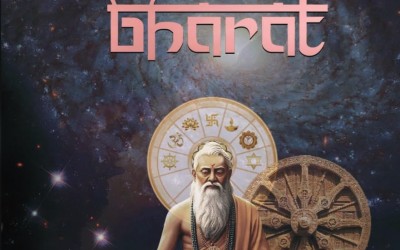
The journey from Vedas to Advait Vedānta is a journey of evolved human consciousness. This highest state of consciousness in a man is Shivattva (What is Shivattva is Ramattva, and what is Ramattva is Krishnattva). As a piece of life, as a body, it is a certain amount of earth, water, air, fire, and ether or ākāśa. And there is a fundamental intelligence that puts all these things together in a particular way to make life out of it. There is a profound and unimaginable level of intelligence that can make simple things like air into life. This intelligence that makes life happen is “consciousness.” What is Not consciousness is Wakefulness, Self-consciousness, and Alertness. Consciousness is the very basis of creation. It is boundless in its nature (body, psychological space, emotional space and energy space all have limited boundaries).
The violence of 1948 in Maharashtra is not widely remembered today. In the aftermath of Gandhi’s assassination, Brahmin families—teachers, priests, farmers, professionals—suddenly found themselves targeted in a wave of anger and organized hatred. Homes were burnt, livelihoods destroyed, and lives shattered. And yet, for all its devastation, this chapter of history was quickly buried, rarely acknowledged in official records or public discourse.
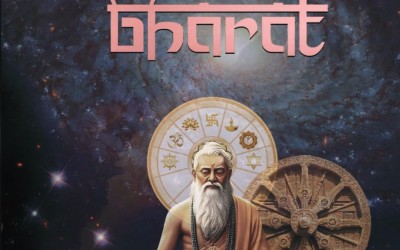
The realization of the Ātman, or Atmajñāna, is Sanātana Dharma’s highest possible Ādhyātmika attainment – with Atmajñāna comes the decisive Vedāntic realization that Ātman and Brahman is one single consciousness. The true Ādhyātmika life of Sanātana Dharma is integral and practical, not idealistic or escapist. Sanātana Dharma, as a darśhana, has always been dynamic and evolutionary; there are no regulating body for the Dharma deciding on the heresies, and blasphemies etc. (These words / practices don’t find any mention in any of the dharmic texts) Being Ādhyātmika, a practicing Sanātani must also be a practicing yogi, one whose life is an unbroken pursuit of the one Self in all. Wherever and whenever the Yogi has been eclipsed by the priest or the scholar, Sanātana Dharma has degenerated into ritual and dogma.
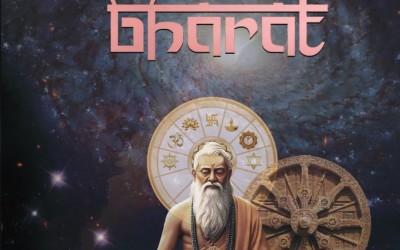
Sanātana Dharma reflects a certain darśhana around Jñāna (Jñāna is the realization by direct cognition that in this changing universe there is nothing but Chaitanya that is consciousness, that is of the form of the seer and the seen, pervading all things, that is the same in all) and Bodhā (consciousness). All of Sanātana darśhana moves towards the dissolution of duality, and what dissolves is not duality but the ‘perception’ of duality. Sanātana darśhana is not monistic but is based on oneness of being in and through all differentiations and diversities, where none of the differentiation and diversity is lost in the oneness. The oneness of Sanātana Dharma is not mathematical but ontological, a spiritual experience and realization of Tad Ekam (That One).







Comments (0)