My Cart

 All Category

The journey from Vedas to Advait Vedānta is a journey of evolved human consciousness. This highest state of consciousness in a man is Shivattva (What is Shivattva is Ramattva, and what is Ramattva is Krishnattva). As a piece of life, as a body, it is a certain amount of earth, water, air, fire, and ether or ākāśa. And there is a fundamental intelligence that puts all these things together in a particular way to make life out of it. There is a profound and unimaginable level of intelligence that can make simple things like air into life. This intelligence that makes life happen is “consciousness.” What is Not consciousness is Wakefulness, Self-consciousness, and Alertness. Consciousness is the very basis of creation. It is boundless in its nature (body, psychological space, emotional space and energy space all have limited boundaries).
The violence of 1948 in Maharashtra is not widely remembered today. In the aftermath of Gandhi’s assassination, Brahmin families—teachers, priests, farmers, professionals—suddenly found themselves targeted in a wave of anger and organized hatred. Homes were burnt, livelihoods destroyed, and lives shattered. And yet, for all its devastation, this chapter of history was quickly buried, rarely acknowledged in official records or public discourse.
The realization of the Ātman, or Atmajñāna, is Sanātana Dharma’s highest possible Ādhyātmika attainment – with Atmajñāna comes the decisive Vedāntic realization that Ātman and Brahman is one single consciousness. The true Ādhyātmika life of Sanātana Dharma is integral and practical, not idealistic or escapist. Sanātana Dharma, as a darśhana, has always been dynamic and evolutionary; there are no regulating body for the Dharma deciding on the heresies, and blasphemies etc. (These words / practices don’t find any mention in any of the dharmic texts) Being Ādhyātmika, a practicing Sanātani must also be a practicing yogi, one whose life is an unbroken pursuit of the one Self in all. Wherever and whenever the Yogi has been eclipsed by the priest or the scholar, Sanātana Dharma has degenerated into ritual and dogma.
History is not just about the past—it is also a mirror for the present. Agnitandav of 1948 recounts a chapter of India’s history that many would prefer to forget: the wave of violence that engulfed Brahmin families in Maharashtra following Mahatma Gandhi’s assassination. The events may be over seven decades old, but their lessons remain deeply relevant in today’s India, where caste tensions, political manipulation, and social divides still simmer. Remembering 1948 is not about reopening wounds—it is about ensuring that such wounds are never inflicted again.
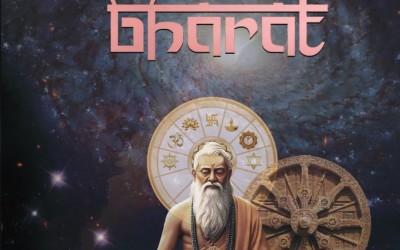
Sanātana Dharma reflects a certain darśhana around Jñāna (Jñāna is the realization by direct cognition that in this changing universe there is nothing but Chaitanya that is consciousness, that is of the form of the seer and the seen, pervading all things, that is the same in all) and Bodhā (consciousness). All of Sanātana darśhana moves towards the dissolution of duality, and what dissolves is not duality but the ‘perception’ of duality. Sanātana darśhana is not monistic but is based on oneness of being in and through all differentiations and diversities, where none of the differentiation and diversity is lost in the oneness. The oneness of Sanātana Dharma is not mathematical but ontological, a spiritual experience and realization of Tad Ekam (That One).
When we speak of India’s democracy, the word “representation” carries both hope and tension. From the earliest days of independence, the idea of who deserves to lead—and on what basis—has been a contested question. The debates of today, where caste identities and vote banks dominate headlines, are not new. In fact, they trace back to the very aftermath of 1947.
While the partition foregrounded religious divisions, a parallel strategy was already being seeded: the use of caste as a lever for political power. If Muslims were to become a consolidated vote bank in the new India, caste arithmetic was the other axis on which political fortunes could be recalibrated. It was a shift that, in 1948, turned deadly.
Agnitandav of 1948, my book, revisits the other side of this forgotten chapter—not the strategies of power, but the suffering of the innocent who paid the price when caste became a dangerous weapon in the hands of politics.
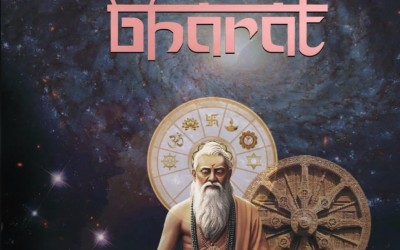
The Vedas, created thousands of years ago, do not owe their authority to anybody, they are themselves the authority, being eternal. They were never written, never created, they have existed throughout time; just as creation is infinite and eternal, without beginning and without end. And this knowledge is what is meant by the Vedas. ‘Śruti’ and ‘Smṛti’ in ancient laws are the source of guidance. ‘Śruti’ is apauruṣeyā, "not made of a man" but revealed to the Rishis, and regarded as having the highest authority; while the ‘Smṛti’ are manmade and have secondary authority. ‘Smṛti’, "that which is remembered", are a body of Bhartiya texts attributed to an author, traditionally written down, in contrast to ‘Śruti’ (the Vedic literature) considered authorless, that were transmitted verbally across the generations and fixed.
Some events are remembered, taught, and commemorated. Others are quietly buried, their lessons left untold. The caste-driven violence of 1948 belongs to the second kind—an episode that scarred communities but slipped through the cracks of official memory.
The partition of British India ranks among the most cynical and coldly calculated acts inflicted by a European colonial power as it surrendered the jewel in its imperial crown in 1947. The British have been known to draw lines on the world map to suit their economic, military and geostrategic interests, and call the divided bits countries. In most cases, these lines were drawn with diabolical foresight to keep the resulting countries prone to internal and external infighting.
The year 1948 is etched in India’s memory for the assassination of Mahatma Gandhi and the challenges of Partition. Yet, hidden beneath these national headlines, a different fire raged — the caste riots. These were not just clashes of communities but struggles where power, politics, and prejudice collided. Agnitandav of 1948 brings these forgotten events back to life, showing how ordinary families bore the brunt of caste-driven violence while extraordinary acts of compassion flickered in the darkness.
But why do these stories matter today? Because the wounds of caste continue to shape our society — and remembering 1948 is not just about the past, but about healing for the future.
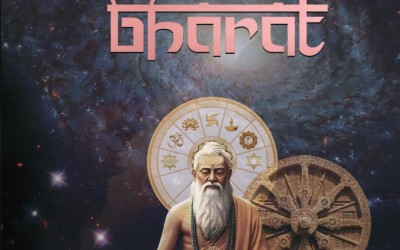
Religion has never been Bharat’s idea or legacy. Its ‘Sanātana dharma’ consists of eternal laws and principles embedded in the science of nature that governs life. ‘Dharma’ represents the deepest metaphysical essence of a worldview that is universally applied and culturally all-encompassing. It stresses an enlightened pluralism that allows the existence of many paths with a divine self within. It refers to Ātman or spirit that does not vary from person to person; its inclusion, existentialism, and equality for all have been for real. Its unity of truth and existence via pluralism and multiculturalism requires stirring up consciousness without moralizing. ‘Dharma’ is both an individual conduct as well as the entire process of governance.
Sanātana Dharma is not a religion; It has never had an established clergy or a central authority, and there has never been any final arbiter in the interpretation or application of dharma, no single text or theology, no prescribed rites or rituals, and whatever rituals that they do exist in the day-to-day living of the dharma are symbolic in nature. Sanātana Dharma has never been about mandatory or prescribed rules for ethical behavior; it does not posit absolute rights or wrongs and holds that everything is relative and contextual and the sense of right and wrong must arise only from one’s inner understanding, guided by the Buddhi or Ātman. The most important practice, therefore, is to awaken and cultivate the Ātman and the Buddhi of which spiritual discrimination – Viveka – is an essential part. Sanātana Dharma is not a set of dos and don’ts; the only thing of spiritual, social, and moral significance is the consciousness, which is incomparably more significant than a set of moral and social rules and laws.
Why I wrote Agnitandav
Every book begins with a question. Mine was simple but heavy: What happens when stories of pain are silenced for too long?
Growing up, I had heard fragments about the caste-driven violence of 1948. They were whispers, half-told tales, often avoided because they carried discomfort and shame. Over time, I realized that these silences weren’t just about the past — they shaped how we understood ourselves today. And that realization became the seed for Agnitandav of 1948.