


My Cart

 All Category
The realization of the Ātman, or Atmajñāna, is Sanātana Dharma’s highest possible Ādhyātmika attainment – with Atmajñāna comes the decisive Vedāntic realization that Ātman and Brahman is one single consciousness. The true Ādhyātmika life of Sanātana Dharma is integral and practical, not idealistic or escapist. Sanātana Dharma, as a darśhana, has always been dynamic and evolutionary; there are no regulating body for the Dharma deciding on the heresies, and blasphemies etc. (These words / practices don’t find any mention in any of the dharmic texts) Being Ādhyātmika, a practicing Sanātani must also be a practicing yogi, one whose life is an unbroken pursuit of the one Self in all. Wherever and whenever the Yogi has been eclipsed by the priest or the scholar, Sanātana Dharma has degenerated into ritual and dogma.
Jñāna, the intellectual knowledge is only a stepping stone to deeper knowledge and wisdom. As the jñāna of the buddhi (intellect) deepens through meditation, nididhyasana, the mind begins to shift from its thought-mode to the intuitive, and a deeper level of reality opens up for the seeker. Jñāna, however, can still go deeper, into the realm of psychic and Ādhyātmika knowing, direct perception and experience of reality, anubhuti. It is here that the method and outcome of darśhana diverge significantly from western philosophy and metaphysics.
Tat Tvam Asi – that Brahman, the Divine, you yourself are, and if you yourself are that Brahman, everyone is equally that Brahman. Brahman reveals itself in its infinite self-becoming as Ātman, the innermost universal self in all, a Puruṣa, the pure conscious being, and the Divine immanent in all existences. Finding one, we shall find the others, for these are the modes of Brahman through which he becomes manifest to us. The Vedantin seeks Brahman in his self, the Ātman, while the Yogi seeks Brahman as Puruṣa, the universal witnessing self behind all phenomena of mind and nature, and the devotee, the Bhakta, seeks Brahman as Saguṇa Brahman. To know Ātman as this universe, and to know the self as Brahman, and to know all other forms as the same Ātman, the equal self-becoming of Brahman, is the three-fold dharma of the Sanātana Dharmi. This dharma is the actualization of the Divine in humanity’s mind, life and body. Thus, the Sanātana Dharma knows no outsider, no alien; none can be permanently hostile to the Dharma, for in all there dwells the same Divine Truth. The Self, or Ātman, is realized when all psychological identifications and sensorial, cognitive, intellectual and emotional distractions are systematically eliminated from the consciousness through contemplation. The Ātman is realized not as an object in one’s consciousness – like thought, feeling or memory etc. – but as one’s own essential being.

The Ātman, though one and indivisible, projects itself into the manifestation in various forms and poises – as Jīvātman, it is the central being presiding over an individual existence, poised above the evolutionary Saṃsāric play, not descending into time, neither taking birth nor evolving, immutable and one with the supreme Brahman. The Ātman support to the being in the material play is the Antarātmān, the Divine presence in all living beings. But it is as the chaitya puruṣa, the psychic being, that it participates in the material and evolutionary play of existence, learning, and growing as the human learns and grows through lifetimes of experiences and realizations. The psychic consciousness has the decisive, direct, and immediate power of effecting profound and irreversible changes in perception, belief, and the quality of consciousness. The psychic is the ultimate evolutionary secret that Sanātana Dharma reveals to the awakened human mind.
Ātman does not reside in body, nor is body related to Ātman. It is not contained in objects, nor does any object exist in it, for it is infinite and spotless. So, it is unattached, desireless and at peace, and as such it remains. It is from an illusion that Ātman seems involved in Saṃsāra.
The Vedic Rishis laid out for the seekers of Truth a fourfold aim of life known in Sanātana Dharma: Puruṣārtha Chatushtaya. Puruṣārtha is a composite Sanskrit word from Purusha and Artha. Purusha means a wise human being. Artha is related to purpose, goal. Together, Puruṣārtha means ‘purpose of human being’ / ‘object of human pursuit’. Chatushtaya means 'a group of four' - Dharma, Artha, Kāma, and Moksha. Kāma is desire, not merely sensual pursuits. Artha is also wealth, or any such material objective. The true Sanātana Dharma celebrates wealth in all its forms, and what it rejects to is poverty of consciousness. The four
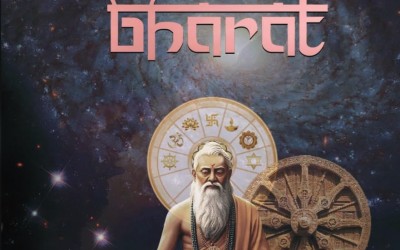
The journey from Vedas to Advait Vedānta is a journey of evolved human consciousness. This highest state of consciousness in a man is Shivattva (What is Shivattva is Ramattva, and what is Ramattva is Krishnattva). As a piece of life, as a body, it is a certain amount of earth, water, air, fire, and ether or ākāśa. And there is a fundamental intelligence that puts all these things together in a particular way to make life out of it. There is a profound and unimaginable level of intelligence that can make simple things like air into life. This intelligence that makes life happen is “consciousness.” What is Not consciousness is Wakefulness, Self-consciousness, and Alertness. Consciousness is the very basis of creation. It is boundless in its nature (body, psychological space, emotional space and energy space all have limited boundaries).

The violence of 1948 in Maharashtra is not widely remembered today. In the aftermath of Gandhi’s assassination, Brahmin families—teachers, priests, farmers, professionals—suddenly found themselves targeted in a wave of anger and organized hatred. Homes were burnt, livelihoods destroyed, and lives shattered. And yet, for all its devastation, this chapter of history was quickly buried, rarely acknowledged in official records or public discourse.

History is not just about the past—it is also a mirror for the present. Agnitandav of 1948 recounts a chapter of India’s history that many would prefer to forget: the wave of violence that engulfed Brahmin families in Maharashtra following Mahatma Gandhi’s assassination. The events may be over seven decades old, but their lessons remain deeply relevant in today’s India, where caste tensions, political manipulation, and social divides still simmer. Remembering 1948 is not about reopening wounds—it is about ensuring that such wounds are never inflicted again.
Sanātana Dharma reflects a certain darśhana around Jñāna (Jñāna is the realization by direct cognition that in this changing universe there is nothing but Chaitanya that is consciousness, that is of the form of the seer and the seen, pervading all things, that is the same in all) and Bodhā (consciousness). All of Sanātana darśhana moves towards the dissolution of duality, and what dissolves is not duality but the ‘perception’ of duality. Sanātana darśhana is not monistic but is based on oneness of being in and through all differentiations and diversities, where none of the differentiation and diversity is lost in the oneness. The oneness of Sanātana Dharma is not mathematical but ontological, a spiritual experience and realization of Tad Ekam (That One).







Comments (0)