


My Cart

 All Category
The journey from Vedas to Advait Vedānta is a journey of evolved human consciousness. This highest state of consciousness in a man is Shivattva (What is Shivattva is Ramattva, and what is Ramattva is Krishnattva). As a piece of life, as a body, it is a certain amount of earth, water, air, fire, and ether or ākāśa. And there is a fundamental intelligence that puts all these things together in a particular way to make life out of it. There is a profound and unimaginable level of intelligence that can make simple things like air into life. This intelligence that makes life happen is “consciousness.” What is Not consciousness is Wakefulness, Self-consciousness, and Alertness. Consciousness is the very basis of creation. It is boundless in its nature (body, psychological space, emotional space and energy space all have limited boundaries).

That Thou Art is the core idea of Advaita Vedānta. Since ‘you’ are not the body, mind, and intellect, the limitations imposed by them will also disappear, and ‘you’ will realize ‘your’ infinite self. The Adhyātma (spirituality) looks at the whole idea of That Thou Art; the Divinity within has the same Divinity outside. The essence of Vedānta is that there is but one Being and that every Ātman is that Being in full, not a part of that Being, the one central ideal of Vedānta is this oneness. There are no two in anything.
Adi Shankaracharya was the greatest exponent of Advaita Vedānta: Brahman alone is real; Jīvātman, the experiencing self, is ultimately non-different from Ātman-Brahman, the highest Self or Reality. Recognizing the illusoriness of the phenomenal world and disidentification from the body-mind complex and the notion of 'doer ship', and acquiring Vidyā (knowledge) of one's true identity as Ātman-Brahman is necessary. Upanishadic statements such as Tat Tvam Asi, "That You are," destroy the ignorance (avidyā). Upon realization, only Advaita (non-dual) remains. Moksha (liberation) is attained through liberation from avidyā, and suffering that inevitably accompanies avidyā. The Vedic seers searched for the ultimate meaning of human life. So, their quest went deeper into the mystery of human existence. And finally, they discovered within themselves that Truth which is the Eternal among the ephemeral, the consciousness of all conscious beings, and the One that pervades many. Adi Shankaracharya gave this discovery a darśhanic mantle, the system of Advaita Vedānta – the One Absolute Truth, which is Brahman, appears as many as the phenomenal world. The macrocosm and the microcosm are of the same Reality. There is only One, not two. Maya (The word ‘maya’, in Sanskrit, is derived from the root ma which means ‘to create or produce’) as acclaimed by Adi Shankaracharya is neither real nor unreal, neither being nor non-being. It is something inexplicable but it has the power to hide the reality from us, to make it appear different. But the human being is meant to go beyond, and realize the Transcendental Truth, which is immanent in all beings.
Ontologically speaking, Brahman, which is transcendental, is immanent in all Jīvās as the Ātman. This two-fold character of Vedānta makes it the most fitting dharma for the modern man and also answers the two common charges against Vedānta. Firstly, by showing Realty to be beyond the mind and the senses, it frees Vedānta from the charges of pantheism. Secondly, its immanent aspect establishes the pragmatic value of Vedānta and refutes the criticism that it is a life-negating dharma. Vedānta does not merely negate the world but it also asserts the Absolute in the same breadth. The emphasis is not on the ephemeral diversity but on the essential unity, for the same Brahman dwells in every heart.
Nirvāṇa Shatakam is a composition from Adi Shankaracharya; Nirvāṇa means extinguished. When we extinguish or remove all that is temporary, like money, fame, relationships and even the body itself, what remains is the Ātman (impersonal witness-consciousness). Shatakam means 6 verses or ślokas. It summarizes the basic teachings of Advaita Vedānta. The nature of the individual Ātman is but a reflection of the one supreme divinity, the Brahman. Brahman is the only truth, says Adi Shankara, in this Nirvāṇa Shatakam. Brahman is not a being, it is the underlying essence of everything, the Supreme Divinity. If ‘you’ have ever questioned, who am I truly? What is my essence? Nirvāṇa Shatakam is the answer.
The Aṣṭāvakragītā is an undiluted exposition of Advaita Vedānta: If you desire Mukti, treat this saṃsāra as Miṭhyā (there is a world existing but this isn’t same as it looks), only Ātman is truth; ‘You’ are the one witness of everything, and are always totally free. The cause of ‘your’ bondage is that you see the witness as something other than this; Witness-consciousness is observing everything, without the “I-ness”. Fear, greed, anger, and ahaṁkāra (ego) are experiences – never real. When simply watched, they just move on. What remains is the flow of life. Life and death are different dimensions of consciousness, which itself does not experience but witnesses all experiences. Completeness is not a destination. This is to know there never was incompleteness, just eternal stillness, and Mukti. What ‘you’ are seeing is ‘you’; Dharma and adharma, happiness and unhappiness, are the attributes of mind. They are not yours. You are neither the doer nor the reaper of the consequences, so you are always free; Everything is a mere conception. The Ātman is free and eternal. Knowing this, why will be an intelligent person act like a child; As long as there is ahaṁkāra inside, even when he does not act, a person thinks he acts. For a wise person without ahaṁkāra, there is nothing he has done. Nor is there anything he has not done; There is no agitation. Nor is there concentration. There is no excess of understanding, nor is there foolishness. When a yogi attains serenity, there is no happiness or unhappiness; Abandon any dharma that is the cause of Kāma and Artha for, this

The violence of 1948 in Maharashtra is not widely remembered today. In the aftermath of Gandhi’s assassination, Brahmin families—teachers, priests, farmers, professionals—suddenly found themselves targeted in a wave of anger and organized hatred. Homes were burnt, livelihoods destroyed, and lives shattered. And yet, for all its devastation, this chapter of history was quickly buried, rarely acknowledged in official records or public discourse.
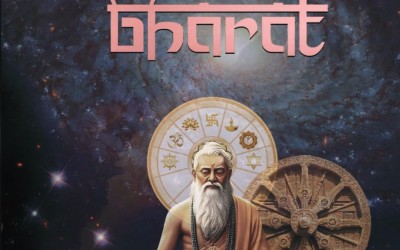
The realization of the Ātman, or Atmajñāna, is Sanātana Dharma’s highest possible Ādhyātmika attainment – with Atmajñāna comes the decisive Vedāntic realization that Ātman and Brahman is one single consciousness. The true Ādhyātmika life of Sanātana Dharma is integral and practical, not idealistic or escapist. Sanātana Dharma, as a darśhana, has always been dynamic and evolutionary; there are no regulating body for the Dharma deciding on the heresies, and blasphemies etc. (These words / practices don’t find any mention in any of the dharmic texts) Being Ādhyātmika, a practicing Sanātani must also be a practicing yogi, one whose life is an unbroken pursuit of the one Self in all. Wherever and whenever the Yogi has been eclipsed by the priest or the scholar, Sanātana Dharma has degenerated into ritual and dogma.

History is not just about the past—it is also a mirror for the present. Agnitandav of 1948 recounts a chapter of India’s history that many would prefer to forget: the wave of violence that engulfed Brahmin families in Maharashtra following Mahatma Gandhi’s assassination. The events may be over seven decades old, but their lessons remain deeply relevant in today’s India, where caste tensions, political manipulation, and social divides still simmer. Remembering 1948 is not about reopening wounds—it is about ensuring that such wounds are never inflicted again.
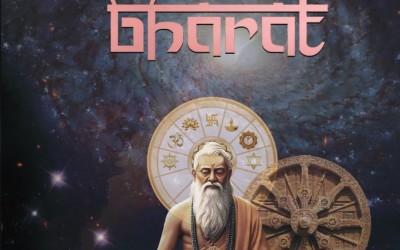
Sanātana Dharma reflects a certain darśhana around Jñāna (Jñāna is the realization by direct cognition that in this changing universe there is nothing but Chaitanya that is consciousness, that is of the form of the seer and the seen, pervading all things, that is the same in all) and Bodhā (consciousness). All of Sanātana darśhana moves towards the dissolution of duality, and what dissolves is not duality but the ‘perception’ of duality. Sanātana darśhana is not monistic but is based on oneness of being in and through all differentiations and diversities, where none of the differentiation and diversity is lost in the oneness. The oneness of Sanātana Dharma is not mathematical but ontological, a spiritual experience and realization of Tad Ekam (That One).







Comments (0)