


My Cart

 All Category

My works "Bhārat: India 2.0" and "Delimitation and States Reorganisation: For Better Democracy in Bhārat" delve into the fundamental differences between a Civilizational State, referred to as Bhārat, and a Nation-State, identified as India.
I have presented the argument that the political entity of 'India' functions within a nation-state framework that closely resembles a Western, post-Westphalian model, which does not align with the ancient and organic realities of Bhārat. This misalignment is a significant source of governance, identity, and democratic challenges faced by the country.
The Nation-State, termed India 1.0, reflects a complicated structure inherited from British colonial rule, set in stone by the Constitution of India, 1950. This structure is seen as complicated rather than organically complex, lacking the self-healing properties typical of well-functioning complex systems.
The Indian Constitution is noted for its heavy reliance on the Government of India Act of 1935, a colonial document designed primarily for administrative convenience. It is noted that nearly 250 Articles of the Constitution of India have counterparts in the 1935 Act, indicating the continuity of colonial administrative practices.
The adoption of the Westphalian model established a Western understanding of federalism in India, focusing on the amalgamation of diverse populations into a political framework. In practice, this approach led to the creation of linguistic states that, while prioritising linguistic identity, have undermined the collective sense of Bhartiyata and resulted in inefficiencies in resource utilisation at the national level.
Furthermore, the current constitutional framework is criticised for lacking depth, as it fails to encompass the rich cultural, spiritual, and dharmic heritage of Bhārat. Notably, there is no mention of God in the document, which contrasts sharply with the deeply religious fabric of Indian society. It is primarily characterised as an administrative legal text, devoid of the spiritual essence integral to the nation's identity. The phrase "India, that is Bhārat" encapsulates the ambiguity inherent in this duality—a modern state layered over an ancient civilizational ethos. I wish they had begun. “Bhārat, that is India”.
This nation-state framework introduces democratic and governance issues, including the unequal value of votes across states. For instance, a vote in Kerala may carry 1.8 times the weight of a vote in Rajasthan, contradicting the principle of equal vote value. This discrepancy enhances the influence of larger states over smaller ones, creating a democratic imbalance.
In contrast, a civilizational state, or Bhārat (India 2.0), is presented as an inherently complex and organic system rooted in thousands of years of shared cultural and spiritual heritage. In this model, political boundaries are secondary to the country’s sacred geography and spiritual unity.

Unity in a civilizational state arises from complexity, grounded in a shared cultural and spiritual legacy outlined in Pauranik and Vedic texts. Historically, pre-colonial principalities and autonomous units interacted through competition and collaboration while remaining aligned with this core heritage, illustrating a unified civilizational DNA.
In a truly civilizational state, the principles of governance are anchored in Dharma, where the state functions not only as an administrative entity but also as a guardian of civilizational values. This model aims to embed aspirational ideas deeply within the fabric of civilizational wisdom.
The evolution from the existing nation-state paradigm, referred to as India 1.0, to a more holistic concept known as Bhārat 2.0 as a civilizational state necessitates a significant and deep-rooted transformation. This shift embodies a civilizational renewal—one that encompasses not only a reimagining of governance but also a radical restructuring of societal values and frameworks.
The transition towards Bhārat 2.0 aims to meld the rich and diverse historical identity of the nation with contemporary administrative practices and governance models. It seeks to create a synergy that honors the ancient traditions and philosophies while embracing modernity. Much like the intricate and harmonious elements present in classical Western music, this blend of old and new aspires to achieve a state of equilibrium that reflects a more profound understanding of what it means to be a part of a vibrant and cohesive society.

This journey entails an introspective look at the foundational aspects of civilization, encouraging dialogue that respects diverse cultures, languages, and histories, thus forging a new narrative that resonates with all citizens. Ultimately, this civilizational transformation aspires to create not just a political entity but a thriving community that thrives on shared values, inclusive growth, and collective progress.
I have argued that the existing Constitution is inadequate and emphasise the need for a new one that reflects the unique spiritual and cultural essence of Bhārat. This proposed document should resonate with civilizational values and cultivate a more inclusive national identity.
An essential component of this vision for a civilizational state involves reorganising the current state structure into a greater number of smaller, uniformly sized states (e.g., my suggested 75 states). This reorganisation would be guided by geographical, historical, linguistic, religious, and cultural contexts. The aim is not to Balkanise but to foster micro-diversity and enhance national unity by ensuring equitable representation and power among states, in line with the foundational principle of equality, crucial to a thriving democracy. This restructuring, rooted in ancient cultural boundaries, offers an opportunity to recreate the Republic of Bhārat de novo.
In summary, the distinction between a civilizational state and a nation-state centres on the concepts of soul and structure. A nation-state is often viewed as a structural framework that is not aligned with India's unique context, as it is largely shaped by colonial legacies and impositions. In contrast, a civilizational state emphasises the deeper cultural and historical identity that shapes a nation’s character and societal values.
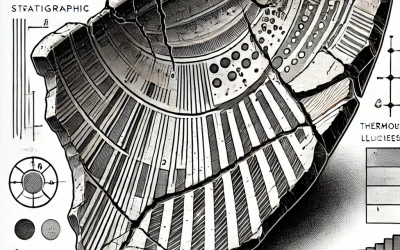
Pots, Pans, and the Architecture of an Economy
Ajay Sharma I Author, India Beyond the Blips
Archaeologists often get mocked in certain circles as the “pots-and-pans people.”
A throwaway line meant to belittle a discipline.
Ironically, those pots and pans have done more to reconstruct India’s economic history than speculative civilisational commentary.
This is not about romance.
It is about method.
And pottery - humble, fragile, abundant - is among the most powerful scientific tools we have for understanding how a civilisation actually worked.
ndia’s past is often narrated through stone—temples, forts, ruins, monuments.
But India’s real civilisational footprint was never stone.
It was systems.
Systems that travelled.
Systems that scaled.
Systems that still power the global economy.

The very idea of revisiting history provokes discomfort. In some quarters, it borders on sacrilege-as if historical writing carries the sanctity of revealed truth. Any attempt to revise it is treated the way one treats a challenge to gospel: with outrage, not inquiry.
And yet, even religious studies have a shelf life.
History, by contrast, is often treated as timeless.

Revisiting the Arthashastra is not an exercise in nostalgia.
It is a reminder that India once operationalised the very systems that we now treat as paperwork - daily, tightly, and with clear lines of responsibility.
For more than two millennia, India ran markets, long-distance trade, and detailed accounting regimes that were exacting, verified, and enforceable.
They were not perfect. But disciplined enough to keep a large economy functioning across shocks and dynasties.
Long before modern textbooks tried to explain these same ideas with different terminology.








Comments (0)