


My Cart

 All Category

“Unravelling Sanātana Bharat” – Bharat’s samskriti, and Sanskrit
Sanskrit language has been the unifying substrate of our dharmic samskriti and has profoundly shaped it. Dharma and Sanskrit are deeply intertwined. Without doubt, it is an understanding of Sanskrit, its inherent harmony and generative powers that enables dharma to flower.
The non-translatable nature of Sanskrit and its deep meanings are compromised by the cultural digestion of dharma into the West through the inadequate translation of vocabulary. In the course of this digestion, crucial distinctions and understandings are lost, important direct experiences of the Rishis sidelined, and the most fertile, productive and visionary dimension of dharma eradicated and relegated to antiquity. Here are few examples demonstrating the non-translatability of the Sanskrit expressions, their commonly used English equivalents that are compared, and their limitations exposed:
Ātman is not soul
Ātman is the foundational principle of Bhartiya Darśhana and spirituality. In Sanātana Dharma, “Ātman refers to the Self-existent essence of human beings, the observing pure consciousness or witness-consciousness as exemplified by the Puruṣa of Sāṃkhya. It is distinct from Jīvātman embedded in material reality, exemplified by the Prakṛti of Sāṃkhya, and characterized by ahaṁkāra (ego, non-spiritual psychological I-ness Me-ness), mind (mānas), and all the defiling kleśas (habits, prejudices, desires, impulses, delusions, fads, behaviors, pleasures, sufferings and fears). Embodied personality (Jīva) and ahaṁkāra shift, evolve or change with time, while Ātman doesn't. It is pure, undifferentiated, self-shining consciousness, eternal, imperishable, beyond time, "not the same as body or mind or consciousness, but... something beyond which permeates all these". Ātman is that which is ever-free, never-bound, the realized purpose, meaning, liberation in life. In order to attain moksha (liberation), a human being must acquire self-knowledge (Atmajñāna or Brahmajñāna)”. Ātman is eternal, indestructible, and is without any beginning and is ageless; Bhagavad-gītā states that Ātman is never born, and never dies. Ātman is Truth, and is Brahman. The journey of Jīva (śharīram/body), and Jīvātman characterized by Ahaṁkāra is to find Ātman where Jīvātman could dissolve. This journey from the perspective of Ātman is Leela, but is Maya from Jīvātman perspective.
With a view to address the incorrect notion around two kinds of Ātman - Jīvātman and Paramātmān where Paramātmān is the supreme person responsible for the functioning of the whole cosmos and Jīvātman is an integral part (amsha) of Paramātmān who is called the Amshi, the bellow Shanti Path chant 'Purnamadah-Purnamidam' from the Isha Upanishad sets the concepts straight:
ॐ पूर्णमदः पूर्णमिदं पूर्णात्पूर्णमुदच्यते । पूर्णस्य पूर्णमादाय पूर्णमेवावशिष्यते ॥ ॐ शान्तिः शान्तिः शान्तिः ॥
Purnam-adah - completeness is I, the subject Ātman, whose nature is Brahman, formless, limitlessness, considered the cause of the creation; Purna- idam - completeness is all objects, all things known or knowable, all formed (that have form) effects, comprising creation; Purnat Purnam udacyate - from completeness, completeness comes forth. From adah (Brahman) the knowable creation (idam) comes forth (udacyate). Purnasya Purnam adaya Purnam eva avasisyate - if purnam (the creation) is added to or subtracted from purnam (Brahman), what remains is still purnam - Brahman! Finally, Ātman can be equated with Paramātmān – it is matter of choice of words; Jīvātman, however, cannot be part of Paramātmān as the purnam i.e. Paramātmān, will only produce purnam, and not an incomplete Jīvātman which is embodied individual being (Jīvātman) embedded in material reality (Jīva) characterized by ahaṁkāra.
Ātman differs from the Western concept of soul; Ātman is eternal and beyond time unlike in Christianity where each soul is created anew. As such, it is different from the notions of soul, which includes consciousness but also the mental abilities of a living being, such as reason, character, feeling, consciousness, memory, perception and thinking.
Śāstra is not Scripture
In Abrahamic traditions, the word ‘scripture’ refers to a book which God reveals for the guidance of all humans through a chosen person – a prophet – at a particular time in history. Any revision to the scripture is allowed only through a new prophet sent by God. The instructions received through such past revelations constitute the scriptures. A scripture is sacrosanct and frozen in a particular historical time and there is no scope for any alteration of its contents. Śāstra, however, is not something Bhagavān revealed to any chosen person at a particular time in history. Śāstras are classified as Śruti and Smṛti. Śrutis denote texts which are eternal (Nityā) and not created by anyone at any point in time (Apauruṣeya). Śrutis are only perceived by the enlightened Rishis through supranormal means. Śruti signifies the intuitive hearing during samādhi and not merely physical hearing through ears which is what ‘that which is heard’ misrepresents. Smṛtis refer to sacred texts written by ancient Rishis to explain the Śrutis and derive their authority from them. The Smṛtis are dynamic and adaptable to reinterpretation for different epochs, preventing their irrelevance with time. The dynamic aspect of the Sanātana Dharma Śāstras is completely lost when they are translated as scriptures.
Guru is not Teacher 
“The word guru is formed by gu, meaning ‘ignorance’ and ru, referring to ‘the remover’, to denote one who removes ignorance. A person must exhibit an immaculate moral rectitude to be called a guru besides, possessing profound knowledge of the Śāstras. The word ‘teacher’ does not demand so many essential qualifications. The Sanskrit word guru cannot just be added as another synonym for the word ‘teacher’ to enhance the English language.
Ahiṃsā is not Non-violence
The principle of non-violence denotes the practice of being completely harmless and kind to other living beings. The Sanātana Dharma concept of Ahiṃsā also emphasizes the qualities of kindness and harmlessness, but not absolutely or unreservedly. Etymologically, the word Ahiṃsā derives from Hiṃsā by adding the prefix a. Ahiṃsā means minimizing Hiṃsā or violence, but not the complete absence of violence. The word, non-violence in English is absolute in its meaning but ahiṃsā means non-violence in a relative sense. In Sanātana Dharma, it is the moral duty of a person to practice violence if it is used to stop a greater violence or evil. In Bhagavad-Gītā, Shri Krishna tells Arjuna to get up and fight dharmic war. Mahatma Gandhi’s methods are based on non-violence and not ahiṃsā.
When Dharma and Sanskrit (the medium) are so intimately intertwined, the dharmic truths need contextual clarity and if these get highjacked either when the medium is compromised or when the context is changed or is misrepresented – when the survival itself is at stake - dharma gradually gets weakened.
I am a scientist specialising in a new and important field of crystal engineering, which focuses on understanding how to construct and manipulate crystalline structures at the molecular level. Many people have expressed curiosity about how someone like me, immersed in the intricacies of chemistry, has ventured into writing about the re-imagination of Bhārat as a civilizational state. In my latest work, “India: Science, Politics, and Geostrategy – A 30-Year Thought Journey,” I aim to explore this intersection and provide readers with a deeper understanding of how the principles of scientific inquiry can inform and enrich our perspective on Bhārat.
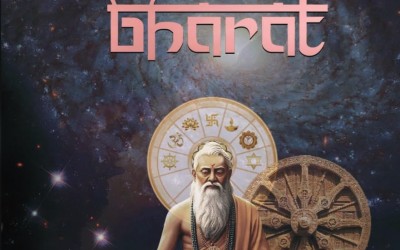
The journey from Vedas to Advait Vedānta is a journey of evolved human consciousness. This highest state of consciousness in a man is Shivattva (What is Shivattva is Ramattva, and what is Ramattva is Krishnattva). As a piece of life, as a body, it is a certain amount of earth, water, air, fire, and ether or ākāśa. And there is a fundamental intelligence that puts all these things together in a particular way to make life out of it. There is a profound and unimaginable level of intelligence that can make simple things like air into life. This intelligence that makes life happen is “consciousness.” What is Not consciousness is Wakefulness, Self-consciousness, and Alertness. Consciousness is the very basis of creation. It is boundless in its nature (body, psychological space, emotional space and energy space all have limited boundaries).
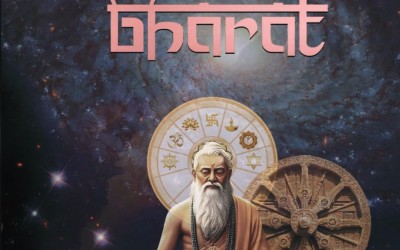
The realization of the Ātman, or Atmajñāna, is Sanātana Dharma’s highest possible Ādhyātmika attainment – with Atmajñāna comes the decisive Vedāntic realization that Ātman and Brahman is one single consciousness. The true Ādhyātmika life of Sanātana Dharma is integral and practical, not idealistic or escapist. Sanātana Dharma, as a darśhana, has always been dynamic and evolutionary; there are no regulating body for the Dharma deciding on the heresies, and blasphemies etc. (These words / practices don’t find any mention in any of the dharmic texts) Being Ādhyātmika, a practicing Sanātani must also be a practicing yogi, one whose life is an unbroken pursuit of the one Self in all. Wherever and whenever the Yogi has been eclipsed by the priest or the scholar, Sanātana Dharma has degenerated into ritual and dogma.
This nation-state framework introduces democratic and governance issues, including the unequal value of votes across states. For instance, a vote in Kerala may carry 1.8 times the weight of a vote in Rajasthan, contradicting the principle of equal vote value. This discrepancy enhances the influence of larger states over smaller ones, creating a democratic imbalance.




Comments (0)