My Cart

 All Category
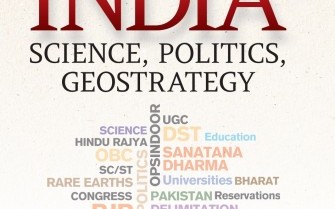
Over the last few years, I've encountered these common questions from Indian citizens about delimitation, something most of us hadn’t even heard of a few years ago. I started writing some short articles about this around a decade ago, and my latest book, “India: Science, Politics, Geostrategy” from Garuda Press, assesses them with the wisdom of hindsight. The essence of my argument is that correct delimitation can occur only if the states of India are roughly equal in size, meaning we have around 75 states, each with a population of approximately two crore.

Some events are remembered, taught, and commemorated. Others are quietly buried, their lessons left untold. The caste-driven violence of 1948 belongs to the second kind—an episode that scarred communities but slipped through the cracks of official memory.
The partition of British India ranks among the most cynical and coldly calculated acts inflicted by a European colonial power as it surrendered the jewel in its imperial crown in 1947. The British have been known to draw lines on the world map to suit their economic, military and geostrategic interests, and call the divided bits countries. In most cases, these lines were drawn with diabolical foresight to keep the resulting countries prone to internal and external infighting.

The year 1948 is etched in India’s memory for the assassination of Mahatma Gandhi and the challenges of Partition. Yet, hidden beneath these national headlines, a different fire raged — the caste riots. These were not just clashes of communities but struggles where power, politics, and prejudice collided. Agnitandav of 1948 brings these forgotten events back to life, showing how ordinary families bore the brunt of caste-driven violence while extraordinary acts of compassion flickered in the darkness.
But why do these stories matter today? Because the wounds of caste continue to shape our society — and remembering 1948 is not just about the past, but about healing for the future.
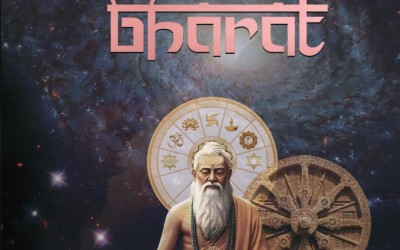
Religion has never been Bharat’s idea or legacy. Its ‘Sanātana dharma’ consists of eternal laws and principles embedded in the science of nature that governs life. ‘Dharma’ represents the deepest metaphysical essence of a worldview that is universally applied and culturally all-encompassing. It stresses an enlightened pluralism that allows the existence of many paths with a divine self within. It refers to Ātman or spirit that does not vary from person to person; its inclusion, existentialism, and equality for all have been for real. Its unity of truth and existence via pluralism and multiculturalism requires stirring up consciousness without moralizing. ‘Dharma’ is both an individual conduct as well as the entire process of governance.
Sanātana Dharma is not a religion; It has never had an established clergy or a central authority, and there has never been any final arbiter in the interpretation or application of dharma, no single text or theology, no prescribed rites or rituals, and whatever rituals that they do exist in the day-to-day living of the dharma are symbolic in nature. Sanātana Dharma has never been about mandatory or prescribed rules for ethical behavior; it does not posit absolute rights or wrongs and holds that everything is relative and contextual and the sense of right and wrong must arise only from one’s inner understanding, guided by the Buddhi or Ātman. The most important practice, therefore, is to awaken and cultivate the Ātman and the Buddhi of which spiritual discrimination – Viveka – is an essential part. Sanātana Dharma is not a set of dos and don’ts; the only thing of spiritual, social, and moral significance is the consciousness, which is incomparably more significant than a set of moral and social rules and laws.

Why I wrote Agnitandav
Every book begins with a question. Mine was simple but heavy: What happens when stories of pain are silenced for too long?
Growing up, I had heard fragments about the caste-driven violence of 1948. They were whispers, half-told tales, often avoided because they carried discomfort and shame. Over time, I realized that these silences weren’t just about the past — they shaped how we understood ourselves today. And that realization became the seed for Agnitandav of 1948.

Why I Wrote Agnitandav of 1948
I grew up listening to fragments of memories of riots of 1948. But they were often spoken in hushed tones, as if wrapped in shame or fear. Writing this book became my way of giving voice to those silences, so that the next generation does not inherit only shadows or false narrative where history should have stood. Couple of years ago, my father and I discussed writing about these events. We started compiling such events from various places and families. Thus the first book (in Marathi) got published. Over the period, we got more information which I included in this English edition for broader audience.
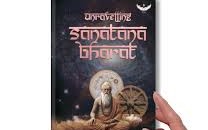
“Unravelling Sanātana Bharat” – Bharat’s samskriti, and Sanskrit
Sanskrit language has been the unifying substrate of our dharmic samskriti and has profoundly shaped it. Dharma and Sanskrit are deeply intertwined. Without doubt, it is an understanding of Sanskrit, its inherent harmony and generative powers that enables dharma to flower.
The non-translatable nature of Sanskrit and its deep meanings are compromised by the cultural digestion of dharma into the West through the inadequate translation of vocabulary. In the course of this digestion, crucial distinctions and understandings are lost, important direct experiences of the Rishis sidelined, and the most fertile, productive and visionary dimension of dharma eradicated and relegated to antiquity. Here are few examples demonstrating the non-translatability of the Sanskrit expressions, their commonly used English equivalents that are compared, and their limitations exposed:
Ātman is not soul
CONSTITUTION OF INDIA – PERSPECTIVES IN 2025
A constitution of a country is a document that incorporates the thoughts, feelings and aspirations of its people and is laid out as a formal document which assimilates these ideas into a standard operating procedure (SOP) for day-to-day governance of the country. All countries, barring a few (Israel, U.K., New Zealand, Saudi Arabia) have a constitution. Generally, a constitution is written when a country goes through a complete and drastic change in its form of government (India 1950, Australia 1901, Canada 1867), overthrow of a monarchy and adoption of democracy (France in 1791, Germany in 1919) or takeover by an autocratic regime (USSR 1924) and also its overthrow (Poland 1992). Stable democracies also periodically overhaul their constitutions, both to reflect better the changing aspirations of their people, and also the changes in their SOP for governance modalities (France, 1958; Nigeria 1999, Ghana 1992). The topic of this blog deals with this last point. Has India with its stable democracy reached a stage where its constitution needs a complete overhaul and makeover to better reflect its present condition than does the 1950 document with all its 105 amendments that have been included over the years?
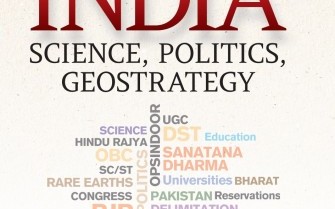
India: Science, Politics, Geostrategy-Science and Citizenship
Scientists are ordinary men and women who do science, either through teaching, research or both. Before they are scientists, they are citizens of a country and have as much of a say as any other citizen in thinking about, talking about or doing something about what they feel is in the better interest of the country in which they live and work. Scientists vote like other citizens and in this sense they say something about national and local issues, although in anonymity. All this is in accordance with Article 14 of our constitution and is as it should be.
Scientists are not special folk who do something that is esoteric and totally beyond the understanding of common people and are therefore ‘different’ from others. Thinking on these lines has led to a common perception that because scientists are not like ordinary people, they should not comment on national issues that affect everyone. Many have asked me why I comment on national issues and why I do not ‘stick to my science’ almost implying that I am not qualified to speak about matters that are felt to be outside of my science.
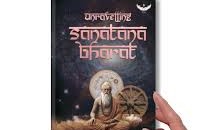
“Unravelling Sanātana Bharat” – The lifeline of samskritic Bharat
The book, “Unravelling Sanātana Bharat” by Arun Ganesh and Dr. Ankit Shah acknowledges the urge to transform Bharat in the next 25-year timeframe, fulcrumed on almost 25,000 years of its samskriti, underpinned by dharmic principles, which are sanātana (eternal, and not static, for their ability to renew themselves). This is the reason, according to Sri Aurobindo, “Sanātana Dharma is life itself; it is thing that has not so much to be believed as lived”.
Samskriti means to live life in an equanimous way - to move with equanimity, ease and exuberance, allowing the human system to attain its peak and let human beings reach their fullest capabilities, with an ability to see things as they are. ‘Samskriti’ represents an essence whose antiquity is older than the legend. The aim of this essence is to allow human mechanism to grow to its fullest potential. Samskriti is not just confined to the material world and includes the pursuit of a higher purpose. Sanātana Dharma samskriti is an inseparable part of the integrally unified Dharma. Aesthetic and sensual pursuits in samskriti are thus under this framework, differing from ‘culture’, which is ill-defined in comparison, devoid of any unified or singular metaphysical foundation.
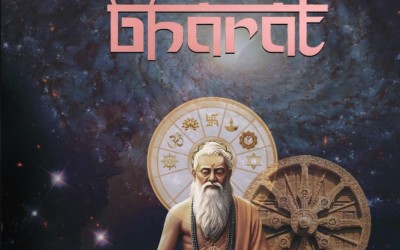
“Unravelling Sanātana Bharat” – The Rishis, Darśhana, and Dharma
The book, “Unravelling Sanātana Bharat” by Arun Ganesh and Dr. Ankit Shah acknowledges the profound contributions of our Rishis who laid the foundation of ‘Bharat Varsha’ and its Sanātana Dharma. The Rishis were amongst the first to delve into the profound mystical depths of human experience, and to them, we owe this body of Samskriti, that has come to be known as Sanātana Dharma. The ancient Vedic Rishis (seers) and Rishikās , who laid the foundations for ‘Bharat Varsha’, were the earliest humans on earth to discover the unifying and the harmonizing principle behind the cosmos and the cosmic experiences.