My Cart

 All Category

Over the last few years, I've encountered these common questions from Indian citizens about delimitation, something most of us hadn’t even heard of a few years ago. I started writing some short articles about this around a decade ago, and my latest book, “India: Science, Politics, Geostrategy” from Garuda Press, assesses them with the wisdom of hindsight. The essence of my argument is that correct delimitation can occur only if the states of India are roughly equal in size, meaning we have around 75 states, each with a population of approximately two crore.

Some events are remembered, taught, and commemorated. Others are quietly buried, their lessons left untold. The caste-driven violence of 1948 belongs to the second kind—an episode that scarred communities but slipped through the cracks of official memory.
The partition of British India ranks among the most cynical and coldly calculated acts inflicted by a European colonial power as it surrendered the jewel in its imperial crown in 1947. The British have been known to draw lines on the world map to suit their economic, military and geostrategic interests, and call the divided bits countries. In most cases, these lines were drawn with diabolical foresight to keep the resulting countries prone to internal and external infighting.

The year 1948 is etched in India’s memory for the assassination of Mahatma Gandhi and the challenges of Partition. Yet, hidden beneath these national headlines, a different fire raged — the caste riots. These were not just clashes of communities but struggles where power, politics, and prejudice collided. Agnitandav of 1948 brings these forgotten events back to life, showing how ordinary families bore the brunt of caste-driven violence while extraordinary acts of compassion flickered in the darkness.
But why do these stories matter today? Because the wounds of caste continue to shape our society — and remembering 1948 is not just about the past, but about healing for the future.

Why I wrote Agnitandav
Every book begins with a question. Mine was simple but heavy: What happens when stories of pain are silenced for too long?
Growing up, I had heard fragments about the caste-driven violence of 1948. They were whispers, half-told tales, often avoided because they carried discomfort and shame. Over time, I realized that these silences weren’t just about the past — they shaped how we understood ourselves today. And that realization became the seed for Agnitandav of 1948.

Why I Wrote Agnitandav of 1948
I grew up listening to fragments of memories of riots of 1948. But they were often spoken in hushed tones, as if wrapped in shame or fear. Writing this book became my way of giving voice to those silences, so that the next generation does not inherit only shadows or false narrative where history should have stood. Couple of years ago, my father and I discussed writing about these events. We started compiling such events from various places and families. Thus the first book (in Marathi) got published. Over the period, we got more information which I included in this English edition for broader audience.
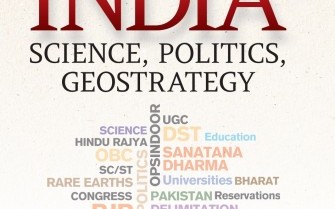
CONSTITUTION OF INDIA – PERSPECTIVES IN 2025
A constitution of a country is a document that incorporates the thoughts, feelings and aspirations of its people and is laid out as a formal document which assimilates these ideas into a standard operating procedure (SOP) for day-to-day governance of the country. All countries, barring a few (Israel, U.K., New Zealand, Saudi Arabia) have a constitution. Generally, a constitution is written when a country goes through a complete and drastic change in its form of government (India 1950, Australia 1901, Canada 1867), overthrow of a monarchy and adoption of democracy (France in 1791, Germany in 1919) or takeover by an autocratic regime (USSR 1924) and also its overthrow (Poland 1992). Stable democracies also periodically overhaul their constitutions, both to reflect better the changing aspirations of their people, and also the changes in their SOP for governance modalities (France, 1958; Nigeria 1999, Ghana 1992). The topic of this blog deals with this last point. Has India with its stable democracy reached a stage where its constitution needs a complete overhaul and makeover to better reflect its present condition than does the 1950 document with all its 105 amendments that have been included over the years?

In today’s fast-paced world, we are often asked to choose between logic and intuition, reason and reverence, science and spirituality. But what if the greatest wisdom lies in embracing both, rather than treating them as opposites?
📖 Scientific Yogi: A Journey Through Science, Yoga, and Heartfulness by Tulsi Arora is not just a book. It is a transformative experience—a powerful bridge between the rational mind and the silent heart. This remarkable work reveals that science and yoga are not divergent paths but complementary forces, both seeking the same ultimate truth: a deeper understanding of existence, consciousness, and our role in the universe.
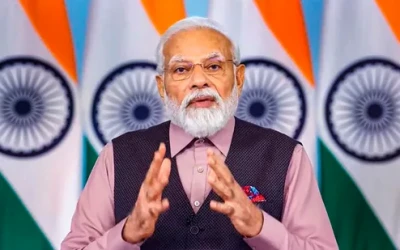
15th August is not just a date on the calendar — it is the heartbeat of every Indian. On this day, our Tricolour waves high in the sky, reminding us of the sacrifices, courage, and determination of countless freedom fighters who gave us the gift of independence. It is a day to honour our nation’s pride and also reflect on how we can contribute to its growth.

In today’s world of trendy superfoods and imported diets, our traditional Indian grains are making a quiet yet powerful comeback. Grains like millets, sorghum (jowar), pearl millet (bajra), finger millet (ragi), kodo, barnyard millet (sama) were once everyday staples in Indian households. Now, they are being recognized once again as key to both personal health and environmental sustainability.
This is more than just a diet change — it’s a return to our roots, to our land, and to mindful living.

In a world grappling with overflowing landfills, microplastic pollution, and climate anxiety, we often turn to innovation and technology for solutions. But sometimes, the most powerful answers lie not in the future, but in the past—in the quiet rhythms of rural India, where sustainability is not a buzzword but a centuries-old way of life.
Far from the urban chaos and plastic-wrapped convenience, many Indian villages continue to practice zero-waste living as part of their cultural DNA. From composting to community sharing, reuse to repurposing, these practices are not enforced—they're simply how life is lived.

In a world racing towards mass production and instant gratification, the art of handmade craftsmanship stands as a quiet but powerful act of resistance. Each handmade product tells a story. Not of assembly lines and automation, but of human intention, patience, and care. Choosing handmade over machine-made is not merely a nostalgic preference; it is a conscious decision that benefits our health, nurtures our souls, and safeguards our planet’s future.