


My Cart

 All Category

=
India’s Knowledge Systems: The Invisible Infrastructure That Still Powers the World
Ajay Sharma I Author, India Beyond the Blips
India’s past is often narrated through stone—temples, forts, ruins, monuments.
But India’s real civilisational footprint was never stone.
It was systems.
Systems that travelled.
Systems that scaled.
Systems that still power the global economy.
What Europe chiselled into monuments, India encoded into methods - materials, algorithms, contracts, currencies, grammars, health frameworks, risk-transfer networks.
And unlike monuments, methods don’t crumble.
They replicate.
This is a brief tour of India’s living knowledge systems—not as heritage, but as infrastructure.

1. STEEL: FROM ANCIENT FURNACES TO MODERN METALLURGY
India produced the world’s first high-carbon crucible steel, a material so advanced that Rome, Persia, and later Europe imported it for blades, armour, and precision tools.
The legacy is not the object.
It is the method: controlled carbon, purity management, and high-temperature metallurgy.
Modern steel chemistry still carries that DNA.
2. AYURVEDA: A SYSTEMS APPROACH TO HEALTH BEFORE SYSTEMS SCIENCE EXISTED
Ayurveda is often boxed as “traditional medicine”.
But its deeper innovation is framework design- a holistic model linking diet, lifestyle, immunity, environment, and metabolic balance.
Its afterlives are everywhere:
preventive medicine, microbiome science, functional foods, global wellness.
What survives is the architecture of thought, not the herbs.
3. PANINI: THE FIRST ALGORITHMIC LANGUAGE SYSTEM
Panini’s grammar was not a text; it was an algorithm - the world’s first generative language machine.
Its descendants:
formal language theory, compilers, syntax trees, NLP.
Tech campuses today use structures first formalised 2,500 years ago.
4. SUGAR: AN INDIAN TECHNOLOGY THAT BECAME A GLOBAL COMMODITY
India pioneered the extraction and crystallisation of sugar—technique and terminology (sarkara → sugar, khaṇḍa → candy).
A method so efficient that the entire world adopted it.
The global sugar industry rests on an Indian industrial process, not Arab folklore or European innovation.
5. DOUBLE-ENTRY ACCOUNTING: A SYSTEM BEFORE THE WEST HAD A VOCABULARY FOR IT
Long before Pacioli, Indian merchants used a structured accounting system built on Brahmagupta’s applied algebra + Hindu numerals - a real information system that supported long-distance trade.
Its afterlife is vast:
modern accounting, financial management, corporate governance, a $110T global economy.
The world counts using India’s numerals and balances using Indian algebraic logic.
6. INDIAN THOUGHT & QUANTUM PHYSICS: NOT INFLUENCE—CONVERGENCE
Ideas of non-locality, observer effect, and unity of reality in Indic philosophies inspired quantum physics.
Two millennia later, Heisenberg, Schrödinger, Bohr, and Einstein found these ideas to be intellectually legible.
The relevance is not mystical.
It is conceptual.
Disciplines often converge when underlying models match.
7. SMALLPOX INOCULATION: A MILLENNIA-OLD PUBLIC HEALTH SYSTEM
India practiced variolation- a controlled form of inoculation – for millennia before Jenner.
Europe’s inoculation methods travelled from Bharat
Modern vaccination systems sit on an ancient Indian logis: introducing controlled exposure to build immunity.
This was public health as a system, not a ritual.
SYSTEMS BEYOND SCIENCE: INDIA’S ECONOMIC INFRASTRUCTURE
The examples above sit on individual domains.
But India’s most powerful innovations were economic and institutional.
8. MATERIAL ENGINEERING AT SCALE
At Dholavira, artisans engineered a synthetic stone (ca. 2500 BCE) that outperformed every known material until diamond tools emerged.
This was not “craft.”
It was industrial chemistry.
9. SAMSTHANAS: INDIA’S CORPORATE FORM BEFORE CORPORATIONS
Two millennia before joint-stock companies, India had Samsthanas—autonomous business organisations with:
Articles of Association
professional CEOs
general assemblies
shared capital
internal governance
Guilds were Europe’s model.
Samsthanas were India’s.
10. MONETARY INNOVATION: MONEY AS FUNCTION, NOT SYMBOL
India’s early currency systems treated money as a tool for trade, not a symbol of state power.
Coins were designed for continuity, portability, and function—not imperial ego.
Modern currency economics echoes the same instinct: utility before identity.
11. DECENTRALISED TRUST: HUNDIS AS PRE-MODERN FINTECH
Centuries before modern banking, India’s hundis moved armies, financed trade, insured maritime cargo, and enabled credit across continents.
It was decentralised trust—before blockchains, before clearinghouses, before global banking.
Europe caught up around the late 19th century.
WHAT TIES THESE SYSTEMS TOGETHER?
Not mythology.
Not sentiment.
Not monuments.
Architecture.
India’s knowledge systems were designed for:
replication
transmission
scale
continuity
interoperability
and multi-century durability
They were systems-first, product-second.
The world celebrated stone.
India built infrastructure - material, computational, linguistic, medical, monetary.
And infrastructure endures.
Silently. Efficiently. Often invisibly.

THE LARGER POINT
Civilisations are remembered for what they leave behind.
Ancient Bharat should be remembered for what it left behind that is still being used.
Steel chemistry.
Language algorithms.
Preventive health frameworks.
Numerals.
Algebraic accounting.
Monetary design.
Decentralised finance.
Industrial material science.
Professionally-led corporations.
These are not relics.
They are operating systems.
The world stands on them.
THE BIG QUESTION
What monumental ideas will Modern India leave behind for the world?
=
Sources:
Pots, Pans, and the Architecture of an Economy
Ajay Sharma I Author, India Beyond the Blips
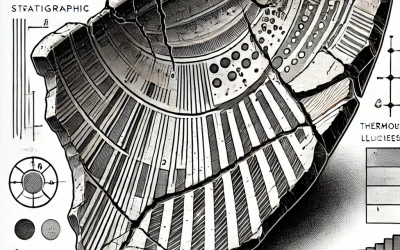
Archaeologists often get mocked in certain circles as the “pots-and-pans people.”
A throwaway line meant to belittle a discipline.
Ironically, those pots and pans have done more to reconstruct India’s economic history than speculative civilisational commentary.
This is not about romance.
It is about method.
And pottery - humble, fragile, abundant - is among the most powerful scientific tools we have for understanding how a civilisation actually worked.
The very idea of revisiting history provokes discomfort. In some quarters, it borders on sacrilege-as if historical writing carries the sanctity of revealed truth. Any attempt to revise it is treated the way one treats a challenge to gospel: with outrage, not inquiry.
And yet, even religious studies have a shelf life.
History, by contrast, is often treated as timeless.

Revisiting the Arthashastra is not an exercise in nostalgia.
It is a reminder that India once operationalised the very systems that we now treat as paperwork - daily, tightly, and with clear lines of responsibility.
For more than two millennia, India ran markets, long-distance trade, and detailed accounting regimes that were exacting, verified, and enforceable.
They were not perfect. But disciplined enough to keep a large economy functioning across shocks and dynasties.
Long before modern textbooks tried to explain these same ideas with different terminology.
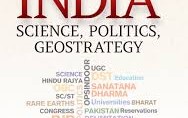
I am a scientist specialising in a new and important field of crystal engineering, which focuses on understanding how to construct and manipulate crystalline structures at the molecular level. Many people have expressed curiosity about how someone like me, immersed in the intricacies of chemistry, has ventured into writing about the re-imagination of Bhārat as a civilizational state. In my latest work, “India: Science, Politics, and Geostrategy – A 30-Year Thought Journey,” I aim to explore this intersection and provide readers with a deeper understanding of how the principles of scientific inquiry can inform and enrich our perspective on Bhārat.








Comments (0)