My Cart

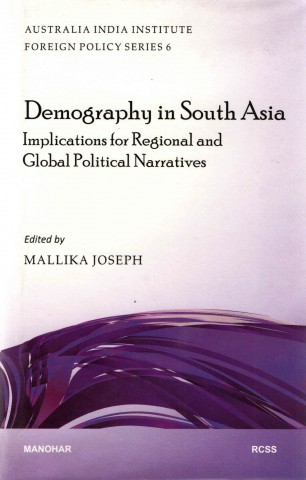
Population growth patterns and sizes remain significant factors that affect economic and political opportunities. In the case of South Asia, there will be implications of both population rise as well as migration. Over the past few years, all the countries in the region have experienced swift demographic changes and will continue to do so. With the exception of Afghanistan, all the other countries have experienced a youth bulge. If this youth bulge can be transformed into an able workforce in the coming decade, these countries could experience high economic growth rates.
However, the demographic transition alone cannot help a country realize the population dividend, as it needs to be facilitated by a variety of factors, foremost being the policies that provide for high quality education, create a more conducive environment for investments, and pave the way for an increased participation of women in the workforce. In the absence of such policies the demographic change could very well have negative implications for the countries concerned.
For the purpose of this volume, the implications of South Asia's demographic changes need to be analysed in terms of the increase in the population as well as migration of people, the latter having implications for countries such as Australia, Canada, the US and those in Europe.
The first eight chapters focus on the eight South Asian countries, while the next four chapters look at the issue from the perspective of the destination countries, Australia, Canada, the US and the European Union.
| ISBN 13 | 9789350980415 |
| Book Language | English |
| Binding | Hardcover |
| Total Pages | 274 |
| Edition | 2014 |
| Publishers | Indian Books |
| Category | Indian Classics Bhartiye Pustakein |
| Weight | 300.00 g |
Population growth patterns and sizes remain significant factors that affect economic and political opportunities. In the case of South Asia, there will be implications of both population rise as well as migration. Over the past few years, all the countries in the region have experienced swift demographic changes and will continue to do so. With the exception of Afghanistan, all the other countries have experienced a youth bulge. If this youth bulge can be transformed into an able workforce in the coming decade, these countries could experience high economic growth rates.
However, the demographic transition alone cannot help a country realize the population dividend, as it needs to be facilitated by a variety of factors, foremost being the policies that provide for high quality education, create a more conducive environment for investments, and pave the way for an increased participation of women in the workforce. In the absence of such policies the demographic change could very well have negative implications for the countries concerned.
For the purpose of this volume, the implications of South Asia's demographic changes need to be analysed in terms of the increase in the population as well as migration of people, the latter having implications for countries such as Australia, Canada, the US and those in Europe.
The first eight chapters focus on the eight South Asian countries, while the next four chapters look at the issue from the perspective of the destination countries, Australia, Canada, the US and the European Union.
| ISBN 13 | 9789350980415 |
| Book Language | English |
| Binding | Hardcover |
| Total Pages | 274 |
| Edition | 2014 |
| Publishers | Indian Books |
| Category | Indian Classics Bhartiye Pustakein |
| Weight | 300.00 g |
Rolling Pumpkin
₹630.00
Rolling Pumpkin
₹630.00